




























Lights / Indicators






































































































































Filter & sort
Sortierung
Motorcycle lighting: Your ultimate guide to LED headlights, turn signals, and perfect visibility
“See and be seen” – that's the top priority and the most important life insurance for every motorcyclist. Your lighting is much more than just a legal requirement; it is your most active safety system. It cuts a swath through the darkness at night, makes you visible to turning cars in broad daylight, and communicates your intentions unambiguously to all other road users. But the dim halogen technology of past decades often no longer meets today's requirements. The good news is that it has never been easier to turn night into day and give your bike an ultra-sharp, modern look.
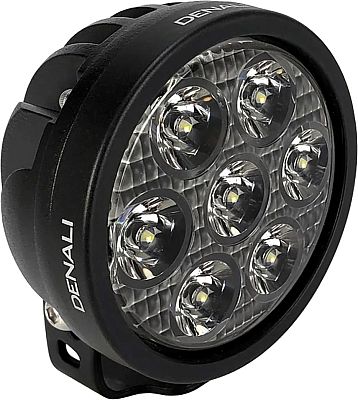
Welcome to the world of modern motorcycle lighting. LED technology reigns supreme here, changing everything: greater brightness, longer service life, lower power consumption, and incredible design freedom. From ultra-bright LED headlights that illuminate the road as if it were daylight to tiny turn signals smaller than a penny – the possibilities are endless. In this ultimate guide, we take you deep into the world of lighting technology. We explain the advantages of the LED revolution, show you the latest trends from 3-in-1 taillights to daytime running lights and turn signals, and give you detailed purchasing advice, including all important legal information.
The LED revolution: Why upgrading is the best decision
Switching from old halogen or incandescent lights to modern LED technology is one of the most effective upgrades you can give your motorcycle. The advantages are overwhelming.
1. Superior visibility: brighter, whiter, farther
Light output (lumens): A modern LED headlight produces many times the amount of light of a halogen lamp while consuming significantly less power. You can see further, wider, and recognize obstacles much earlier.
Light color (Kelvin): At around 6000 Kelvin, the light from LEDs is very similar to natural daylight. This ensures stronger contrasts and less tiring vision at night.
Signaling effect: LED turn signals and brake lights illuminate at full intensity without delay. This fraction of a second can be crucial in being noticed by following traffic.
2. Extreme durability & efficiency
A halogen bulb is a wearing part that often fails after one or two seasons. An LED, on the other hand, has a service life of tens of thousands of operating hours—it usually lasts for the entire life of a motorcycle. It also consumes significantly less power, which reduces the load on your motorcycle's alternator and battery.
3. A new world of design: Small, smaller, Kellermann
LEDs are tiny. This miniaturization has sparked a revolution in the design of turn signals and taillights. Where clunky "ox-eye" lights, today there are tiny light points that are almost invisible when switched off, but unfold incredible brightness when activated.
Your new lighting system in detail: an overview of the components
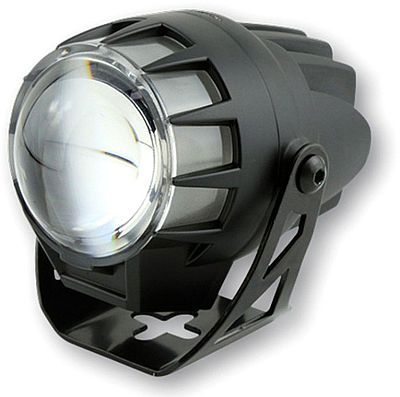
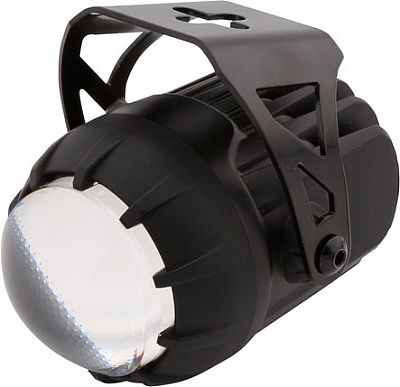
The headlight: The eye of your bike
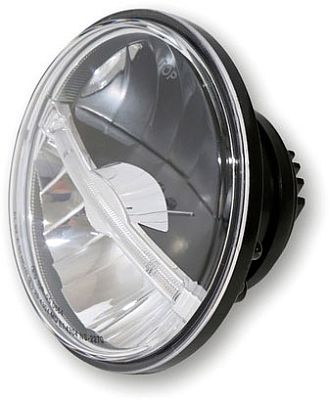
Description: The most important light on your motorcycle. Upgrading to a modern LED headlight is a quantum leap in night vision and safety. They come in countless designs to suit every style.
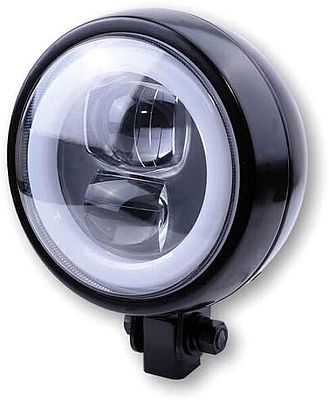
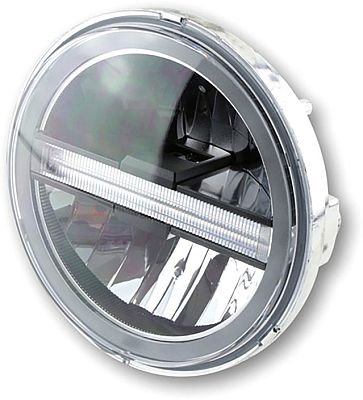
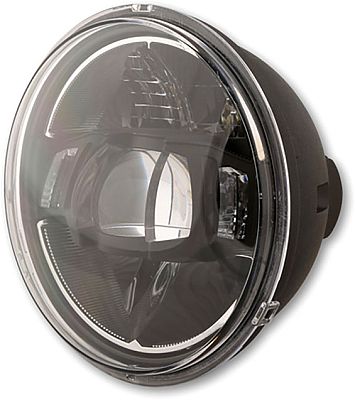
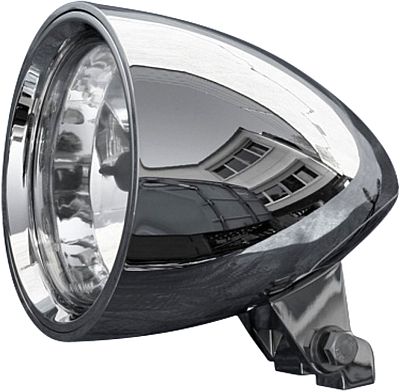
Product example: Highsider Skyline H4 Headlight 5 3/4 Inches
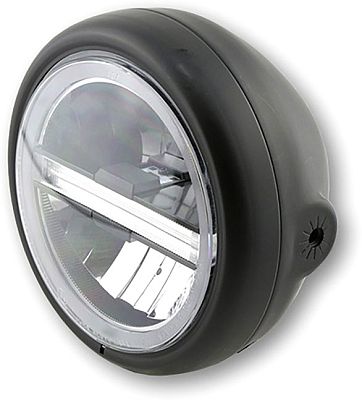
Innovation for your safety—the SKYLINE model is a conventional headlight equipped with an H4 bulb (12 volts, 60 watts / 55 watts) and featuring a Power LED parking light ring. The entire unit is housed in a high-quality black or chrome-plated metal housing.
The turn signals: The statement of your style
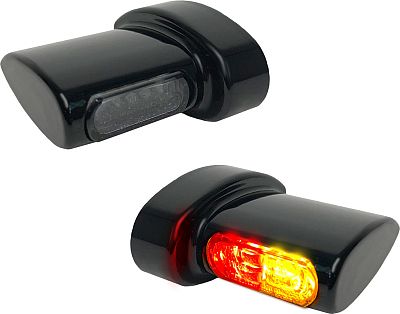
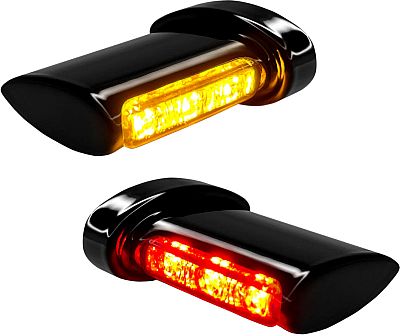
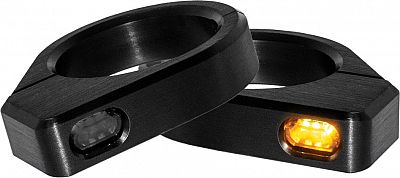
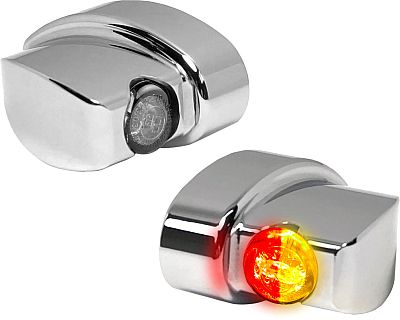
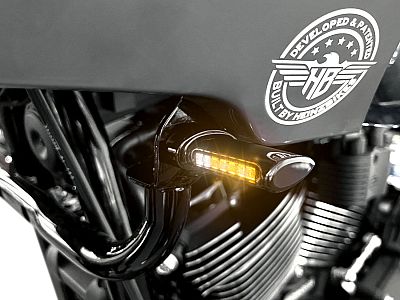
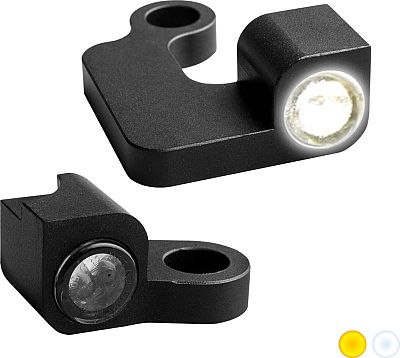
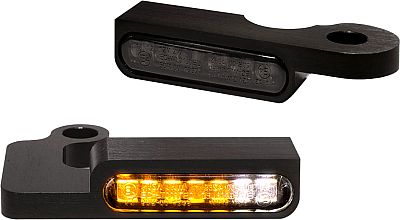
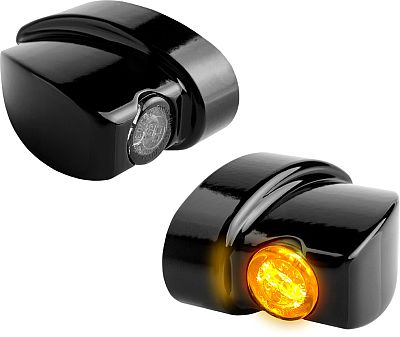
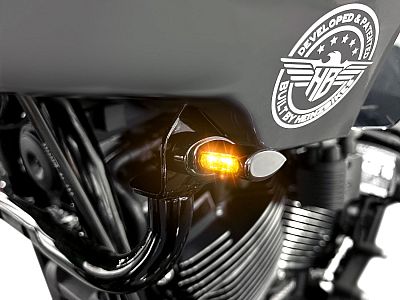
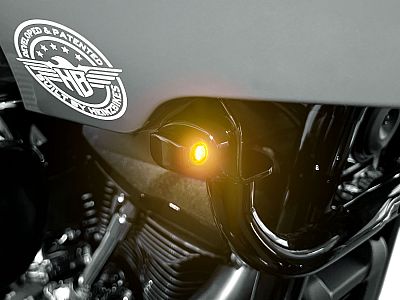
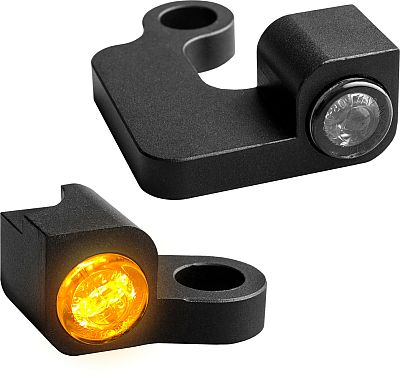
Description: No other component is as popular for customization as the turn signal. Today, LED technology enables designs ranging from tiny “pin” turn signals to elegant handlebar end turn signals.
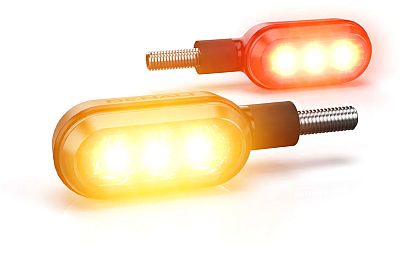
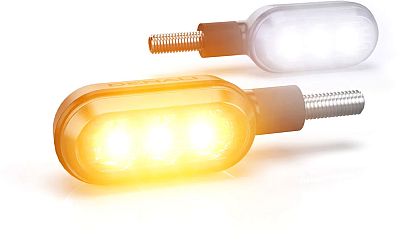
Product example: Kellermann Atto turn signals
The Kellermann Atto turn signal is the legend of miniaturization. Its light-emitting surface is smaller than a penny, but its brightness is outstanding and absolutely legal thanks to “high-power LED” technology.
Rear lights & 3-in-1 solutions: A tidy rear end
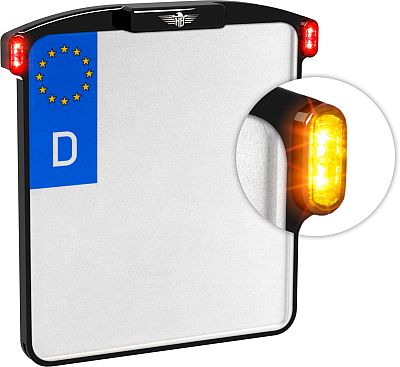
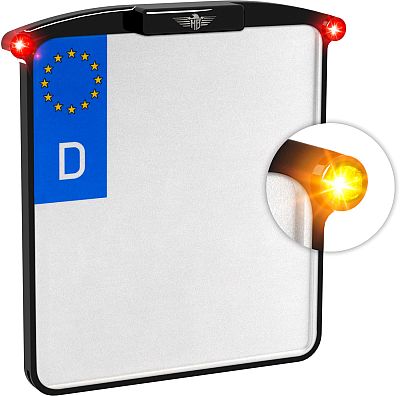
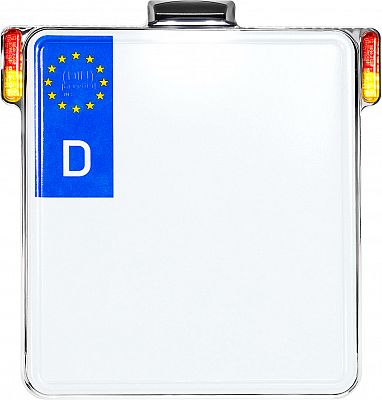
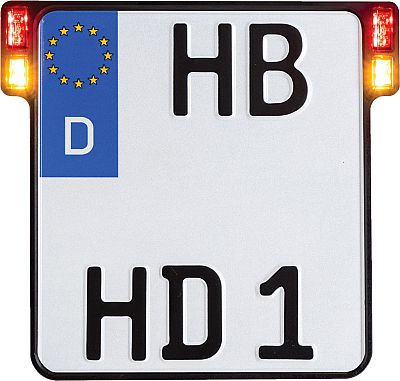
Description: Want a clean, minimalist rear end? A 3-in-1 solution is the answer. These ingenious units combine rear lights, brake lights, and turn signals in a single, small housing. This allows for an extremely tidy rear end without separate, protruding turn signals.
Product example: Heinz Bikes All-In-One 2.0
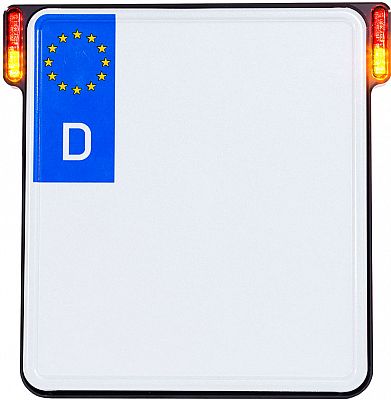
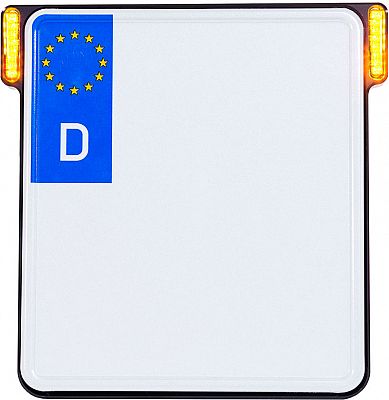
Heinz Bikes All-In-One 2.0 is a high-end solution that combines this 3-in-1 functionality with an integrated license plate light, ensuring an extremely clean rear end.
Daytime running lights (DRL): Being seen in broad daylight
Description: Separate daytime running lights are the most effective way to be seen by other road users during the day. They are often brighter and have different light characteristics than normal low beams.
Product example: Kellermann Dayron
The Kellermann Dayron is a groundbreaking innovation. It is the world's first approved turn signal that integrates an extremely bright, ring-shaped daytime running light.
Purchasing advice & legal information: Your guide to legal and safe lighting
This is the most important section! Incorrectly installed or non-approved lighting will result in the operating license being revoked.
The e-mark: Your ticket to legality
Every lighting component that you want to use legally in road traffic must have an E-mark (an “E” in a circle or box, followed by a number). This mark guarantees that the component has been tested in accordance with European regulations and may be installed without registration. Components without an E-mark are prohibited on public roads!
The turn signal relay: The clock
Your turn signals If you convert from the original filament turn signals to LED turn signals, you will notice that they flash much too quickly. The reason: LEDs have much lower electrical resistance. You have two solutions:
The simple solution: Replace your original load-dependent turn signal relay with a load-independent LED turn signal relay.
The alternative: Install a power resistor in the cable for each LED turn signal.
Correct installation: positions and distances
There are also clear legal requirements in the StVZO (German Road Traffic Licensing Regulations) that you must comply with when installing indicators. The most important ones are:
Front turn signals: Minimum distance between each other 240 mm.
Rear turn signals: Minimum distance between each other 180 mm.
Rear light/brake light: Must be mounted in the center of the rear of the vehicle.
FAQ: Frequently asked questions about motorcycle lighting
1. Are LED turn signals permitted on motorcycles?
Yes, absolutely, as long as they have a valid E-mark for use as front or rear direction indicators.
2. Do I have to register LED turn signals?
No. If the turn signals have an E-mark and the installation requirements (distances, etc.) are met, they do not need to be registered.
3. What does the E-mark mean?
It is confirmation that the component has been tested in accordance with a European ECE regulation and may be used legally in road traffic in the EU.
4. Why do my new LED turn signals flash too fast?
Because LEDs have much lower resistance than the original bulbs. You either need to install power resistors or, the better solution, replace your turn signal relay with a load-independent LED relay.
5. What is the advantage of an LED headlight?
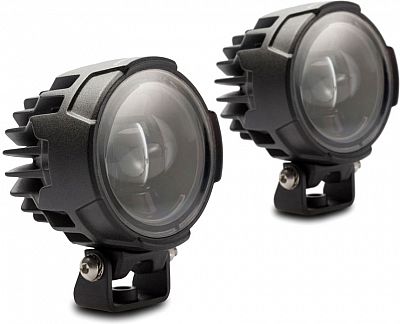
It is significantly brighter, illuminates the road better, has a light color similar to daylight (better contrast), lasts practically forever, and consumes less power than a halogen lamp.
6. Are 3-in-1 rear lights permitted in Germany?
Yes, if they are tested as combined tail, brake, and direction indicator lights (indicated by the E-mark) and the installation regulations are complied with, they are legal.
7. Do I always have to ride my motorcycle with my lights on?
Yes. In Germany and most other countries, daytime running lights are mandatory for motorcycles. This means that you must always have at least your low beam or special daytime running lights switched on.
8. What is the difference between a main headlight and an auxiliary headlight?
The main headlight is responsible for low beam and high beam. Auxiliary headlights (e.g., fog lights) may only be switched on in addition and under certain conditions (fog, heavy rain).
9. My turn signals are marked “11” and “12.” What does that mean?
These are the markings for the mounting position. “11” stands for front turn signals, “12” for rear turn signals.
10. How bright can a motorcycle headlight be?
The brightness (light intensity) is regulated by law and is ensured during the test for the E-mark. You can rest assured that every headlight with an E-number meets the legal requirements.
Conclusion: Turn night into day and become a shining example
Upgrading your motorcycle lighting is one of the most rewarding investments you can make. You gain a huge boost in active safety because you can see much more at night and are much more visible to others at any time of day or night. At the same time, you give your motorcycle an individual and razor-sharp look with modern, minimalist LED components.
Upgrade now and ride with the confidence of having everything in view.
Table of contents