


















































Suspension































Filter & sort
Sortierung
Motorcycle chassis: your ultimate guide to perfect handling, comfort, and safety
The engine is the heart of your motorcycle, but the chassis is its soul. It is the complex system of springs, dampers, forks, and swingarms that determines everything: from precise cornering, supreme stability at high speeds, and the comfort that makes a long trip a pleasure. A standard chassis is often a compromise, designed for an average rider and an average load. But you are not average. Your riding style, your weight, and your requirements are unique. Upgrading or optimizing your chassis is therefore not just for racers—it's the most direct and effective way to achieve greater safety, more confidence, and ultimately more riding pleasure.
But the world of suspension technology is complex. What exactly does a new strut do? Do I need a steering damper? And what is behind terms such as spring preload, rebound and compression? In this ultimate guide, we take you on a journey through the fascinating physics of driving. We explain the functioning of the individual components in an understandable way, guide you through the best upgrade options, from replacing the shock absorber to a complete chassis set, and help you to exploit the full potential of your motorcycle.
Why optimize the chassis? The limitations of the standard configuration
A standard chassis is often the biggest hidden weakness of an otherwise great motorcycle. Manufacturers have to make compromises to save costs and satisfy a wide range of motorcyclists.
The compromise of the series: built for the ‘average’
Standard shock absorbers and forks are often only adjustable in terms of spring preload (and sometimes traction). The damping is tuned to an average weight of approximately 75-85 kg. If you are lighter or heavier, often ride with a passenger or carry a lot of luggage, the suspension is already operating outside its optimal range.
The advantages of a high-quality accessory chassis
Perfect adjustability: high-quality chassis components offer full adjustability of spring preload, rebound and compression damping. You can fine-tune the chassis to your weight, riding style and the load in question.
Greater reserves and safety: aftermarket struts and front forks use higher-quality materials and superior damping technology. They respond more sensitively to small bumps and offer significantly more reserves before the wheel loses contact with the road in the event of hard impacts (e.g., in potholes or when braking).
More comfort and better feedback: a good chassis filters out unpleasant shocks, but at the same time gives you clear and accurate feedback about the condition of the road and the grip of your tires.
The most important parts of your suspension: a detailed overview
The suspension strut: the heart of the rear suspension
The mission of the suspension strut
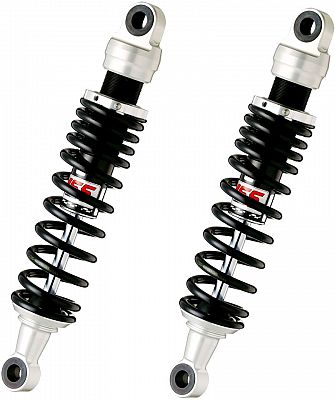
The suspension strut (or, on older models, two stereo suspension struts) has two tasks: the spring carries the weight of the motorcycle and the rider and absorbs hard shocks. The damper controls the speed at which the spring compresses and extends, thus preventing uncontrolled swaying.
Upgrade options
Replacing the often substandard standard shock absorber is the most effective upgrade to the chassis. A high-quality accessory shock absorber offers a spring that is tailored to your weight and fully adjustable damping.
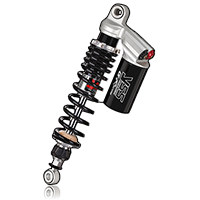
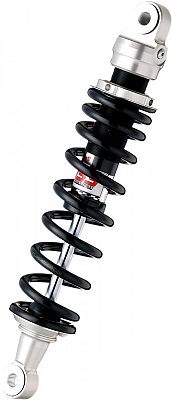
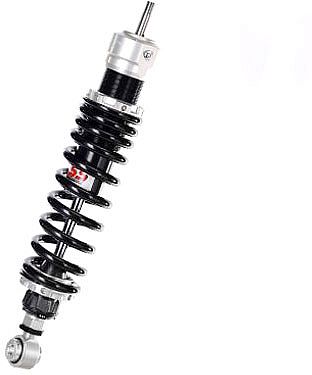
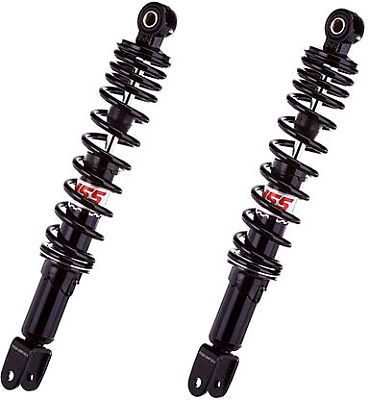
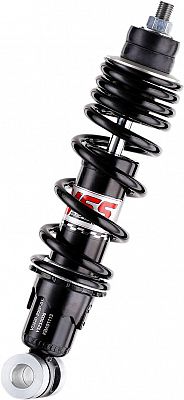
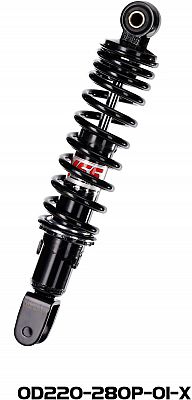
Product example: YSS Mono shock absorber
A YSS Mono shock absorber is an excellent example of a high-quality replacement shock absorber, offering a noticeable improvement over the standard version and often providing unbeatable value for money.
The fork & fork springs: guiding the front wheel
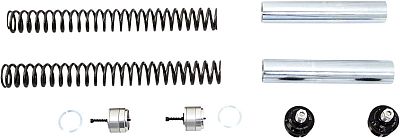
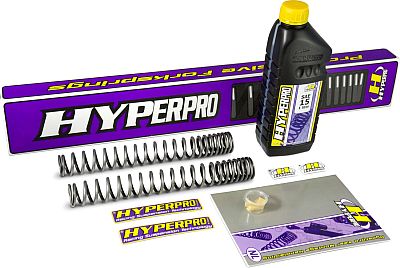
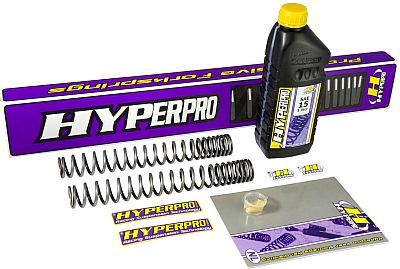
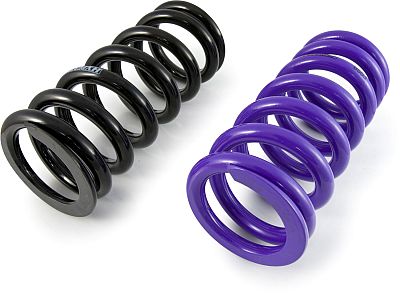
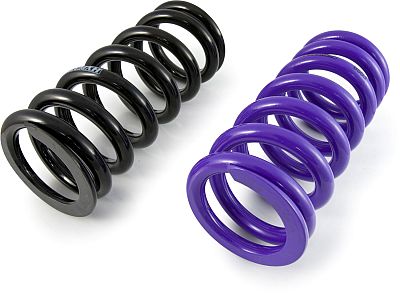
Description: The telescopic fork steers the front wheel and acts as a spring and shock absorber. Here too, the standard configuration is often a compromise. A simple but very effective upgrade is to replace the standard linear fork springs with progressive springs. These become softer under light loads and increasingly harder under heavy suspension (e.g., when braking), which prevents sagging.
The steering damper: Life insurance against steering shocks
Description: Especially on sporty motorcycles with aggressive geometry, the dreaded steering kickback (“kickback” or “tank slapper”) can occur during strong acceleration on uneven road surfaces. A steering damper is a hydraulic damper that suppresses these rapid, uncontrolled steering movements and stabilizes the handling.
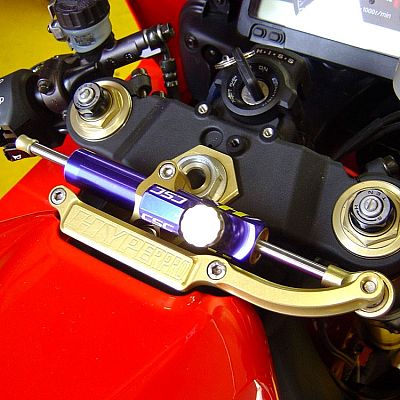
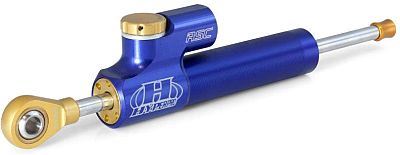
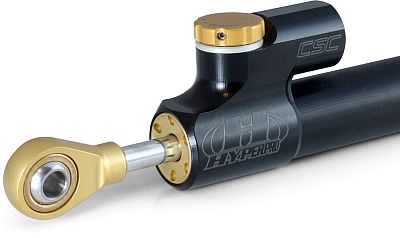
Product example: Hyperpro RSC steering damper
A Hyperpro steering damper mounting kit is a high-quality solution for retrofitting this important safety feature to your motorcycle.
Complete chassis solutions: the complete worry-free package
The chassis set (Streetbox): perfect harmony
Description: The best performance is achieved when the fork and shock absorber are perfectly matched. A complete chassis set, often referred to as a “Streetbox,” offers just that: a high-quality, adjustable shock absorber and matching progressive fork springs, including the correct fork bushings, in one package.
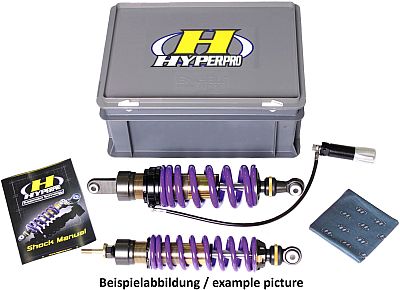
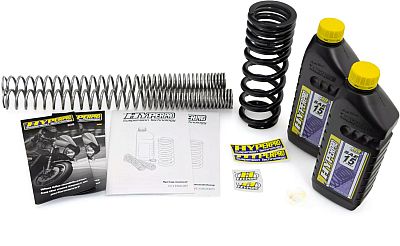
Product example: Hyperpro Telelever Streetbox chassis set
The Hyperpro Telelever Streetbox chassis set is one such complete solution, specially developed for the unique Telelever chassis found on many BMW models.
The reduction: a safe position for every rider
Description: For many motorcyclists, a safe position with both feet on the ground is the decisive factor for confidence in the motorcycle. If you feel insecure on your motorcycle because you can only reach the ground with your toes, lowering is the solution.
How does lowering work?
This is usually achieved by shorter front fork springs and a shorter rear suspension or modified rear swing arms. This lowers the entire motorcycle by a few crucial centimeters.
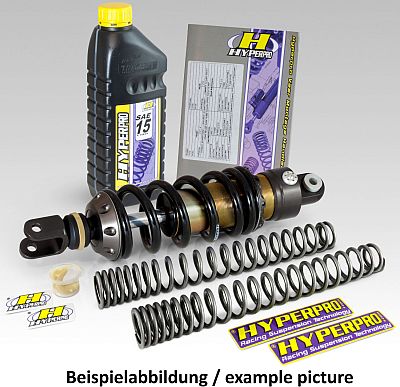
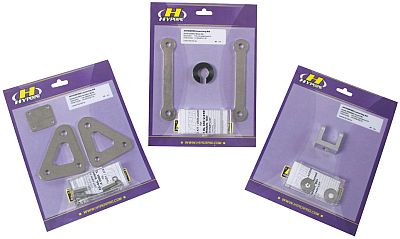
Product example: Hyperpro LK lowering kit
A Hyperpro LK lowering kit contains all the necessary parts for professional and safe lowering.
Protection and maintenance: preserve the value of your parts
Description: Your shock absorber is constantly exposed to dirt and stone chips thrown up by the rear wheel. This can damage the sensitive piston rod and seals. A simple protective cover significantly extends the life of your expensive chassis.
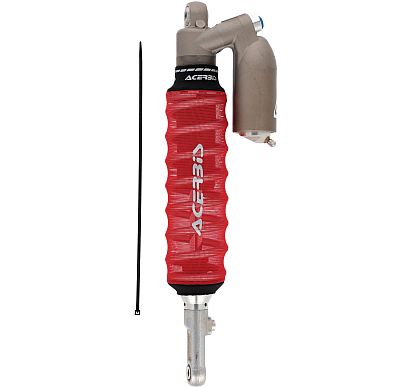
Product example: Acerbis shock absorber protective cover
An Acerbis neoprene shock absorber protective cover is an inexpensive and highly effective way to protect your shock absorber.
FAQ: frequently asked questions about motorcycle chassis
1. What is the most important thing about the motorcycle chassis?
The chassis includes all the parts that connect the motorcycle to the road (frame, fork, swingarm, suspension, wheels). Its main job is to provide stability, maneuverability, and comfort by ensuring that the tires are always in contact with the road surface.
2. How do I adjust my motorcycle chassis correctly?
The basic adjustment always starts with the spring preload, to set the correct negative spring travel (sag) for your weight. Then the rebound and compression damping are adjusted to control the spring and rebound behavior. A professional adjustment in a specialized workshop is often the best investment.
3. What is a steering damper and do I need one?
A steering damper suppresses rapid, uncontrolled steering movements (steering kickback). For most touring and everyday motorcycles, this is not absolutely necessary. However, for supersport motorcycles and powerful naked bikes with aggressive geometry, it is a very important safety feature.
4. What are the disadvantages of lowering?
The biggest disadvantage is the reduction in the maximum possible lean angle, as hard parts such as the footrests or the exhaust are more likely to touch the ground. In addition, the suspension travel is reduced, which can reduce comfort on poor road surfaces.
5. Do I need to register a new chassis?
Yes. Chassis components are safety-relevant parts. High-quality accessory struts and kits always come with an ABE (Allgemeine Betriebserlaubnis, general type approval) or a parts certificate. Parts with a certificate must be approved by an inspection authority (TÜV/Dekra) after installation and registered in the vehicle documents.
6. What is the difference between a mono and a stereo strut?
Modern motorcycles almost exclusively use a central mono shock absorber, which is controlled by a reversal system. Older or classic motorcycles (e.g., cruisers, retro bikes) often use two side-mounted stereo shock absorbers.
7. What does “progressive” fork springs mean?
Progressive springs have a variable coil. They are soft and responsive at first, but become increasingly harder with strong suspension. This ensures a perfect balance between comfort and reserves against sagging during braking.
8. How often should my chassis be serviced?
Spring elements also wear out. The damper oil loses its viscosity over time. Most experts recommend servicing the fork and strut every 20,000 to 30,000 kilometers (oil change, seal check) to maintain full performance.
9. What is a “Telelever” chassis?
BMW's Telelever system decouples the spring and steering functions at the front wheel. The biggest advantage is its anti-dive behavior: the motorcycle hardly tilts when braking hard and remains extremely stable.
10. Is investing in an expensive chassis really worth it?
For the demanding rider who wants to exploit the full potential of their motorcycle: yes, absolutely. A high-quality, well-tuned chassis is perhaps the most radical and rewarding improvement you can make to your motorcycle.
Conclusion: unleash the true potential of your motorcycle
Your chassis is the direct connection between you and the asphalt. It determines confidence, control, and comfort. Optimizing your chassis is not an esoteric science for racers, but a logical step for any motorcyclist who wants to get more out of themselves and their machine. Whether you create more reserves with a new shock absorber, gain more safety with a lowering kit, or perfect stability with a steering damper—you are investing directly in a better, safer, and more intense riding experience.
Don't settle for a compromise.
Table of contents