





















































Stands






















Filter & sort
Sortierung
Motorcycle stands and accessories: Your ultimate guide to secure parking and easy maintenance
It's a moment that makes every biker's heart sink: you park your freshly cleaned, beloved motorcycle on its side stand, turn around briefly, and hear that terrible crashing sound. The soft asphalt on a hot summer day, the soggy grass at the biker meet-up, or the loose gravel at the lookout point gave way—and now your bike is lying on its side. Scratches, a bent lever, a broken turn signal. All because of a tiny point of contact with the ground. The motorcycle stand is one of those components that we hardly think about until it fails.
But the world of stands is much bigger and more important than you might think. It ranges from clever upgrades for your standardto professional lifting systems that allow you to carry out maintenance work that you could only dream of in your garage. In this ultimate guide, we take you deep into the world of stability and maintenance technology. We explain how you can eliminate the biggestweaknesses of your side stand, why a center stand is worth its weight in gold, and how the right assembly stand can make you the undisputed ruler of your own workshop.
The basics: Stands for everyday use and on the road
These systems are either permanently installed on the motorcycle or optimize the existing equipment for greater safety in everyday use.
The side stand: The universal standard with one weakness
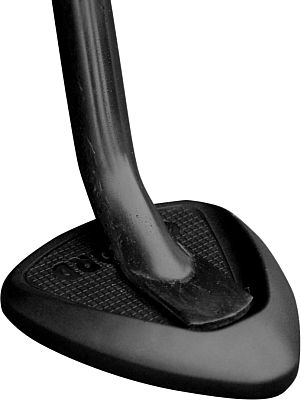
Description: Every motorcycle has one. The side stand is the easiest and quickest way to park your bike. It is a simple but effective component. However, it has a systemic weakness: its contact surface is tiny. On any surface that is not completely solid and level (hot asphalt, gravel, grass, cobblestones), this small area can sink, causing the motorcycle to tilt too far and tip over.
The most important upgrade: the side stand extension
The mission: More surface area, more safety
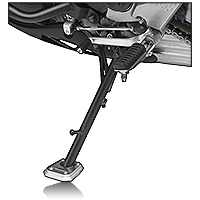
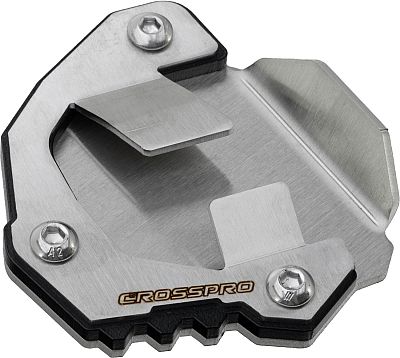
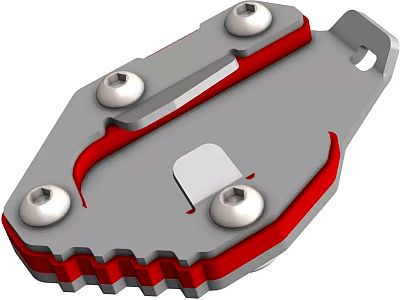
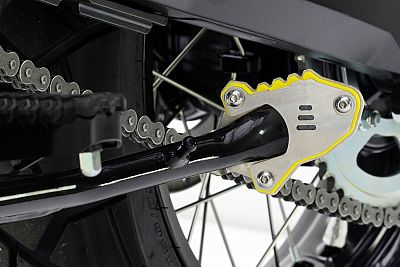
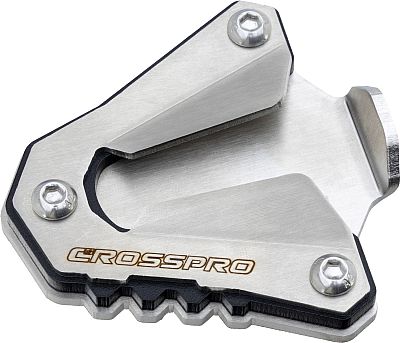
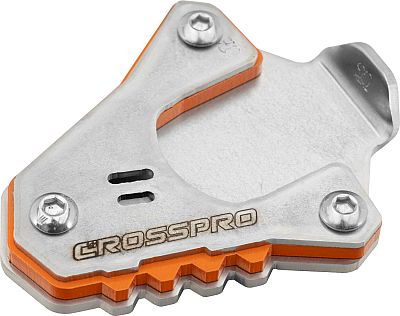
The solution to the problem is ingeniously simple: a side stand extension or stand plate. This small but extremely robust component made of milled aluminum and stainless steel is screwed onto the original base plate of your side stand and often increases the contact area by more than 100%.
Your invaluable advantage
The significantly larger surface area distributes the weight of the motorcycle more effectively and prevents the dreaded sinking into soft ground. It is the cheapest and most effective insurance against an expensive fall. Such a plate should be part of the basic equipment of every touring and adventure rider.
Product example: Givi ES side stand extension
The Givi ES side stand extension is a prime example of a model-specific, perfectly fitting, and extremely robust solution that gives you a feeling of security every time you park.
The center stand: The ultimate comfort and maintenance upgrade
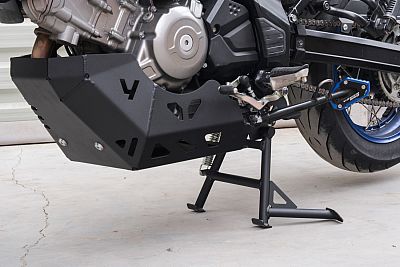
Description: A center stand, often available as an optional extra or retrofit, is indispensable for many touring and everyday riders. It props up the motorcycle so that the rear wheel is suspended in the air and the entire vehicle stands upright and extremely stable.
The advantages are enormous:
Safe parking: On a center stand, the motorcycle is absolutely secure even on uneven ground or in stormy weather.
Easy maintenance: Cleaning and lubricating the chain, cleaning the rims, checking the tire pressure – all this becomes child's play because the rear wheel can turn freely.
Space-saving maneuvering: A jacked-up motorcycle is easier to maneuver in a cramped garage.
Perfect winter storage: Over the winter, the center stand relieves pressure on the tires and suspension elements, preventing flat spots and uneven wear.
Workshop heroes: Mounting stands for ambitious mechanics
For all work that goes beyond simple chain maintenance, a mounting stand (often also called a lift or paddock stand) is an absolute must. It lifts the front or rear wheel completely off the ground and ensures a professional and secure stand.
The rear wheel assembly stand: The indispensable all-rounder
Description: The rear wheel stand is the first and most important repair stand you should buy. It lifts the entire rear of the motorcycle and is the basis for almost all maintenance work.
Mounting systems explained: Prism sockets vs. universal adapters
Mounting for prism sockets (bobbins): This is the safest and most stable method. Small threaded sockets (“bobbins” or “racing adapters”) are screwed tightly to the swing arm. The mounting stand grips these bobbins with its V-shaped mounts and lifts the motorcycle securely.
Rubberized angle mounts (universal): For swing arms without bobbin mounts. Here, rubberized L-shaped angles are placed under the swing arm. This method is more flexible, but not quite as secure as the bobbin mount.
The front wheel mounting stand: For major work
Description: A front wheel stand lifts the front of the motorcycle. Important safety note: A front wheel stand must never be used on its own! The motorcycle must always be securely jacked up at the rear first.
The mounting systems explained: Fork adapter vs. steering head stand
Mounting at the fork ends: Special mandrels or rubberized mounts engage in the openings on the underside of the fork legs. Ideal for changing tires or cleaning the rim.
Steering head stand: This is the most professional solution. The stand engages with a specific mandrel from below into the opening of the steering head shaft. This completely frees up the fork and relieves the load. This is the only method that allows you to completely remove the fork legs, e.g. for a simmer ring or oil change.
FAQ: Frequently asked questions about motorcycle stands
1. Is a stand mandatory on a motorcycle?
Yes. According to the law, every motorcycle must have at least one stand (usually a side stand) in order to park it safely.
2. Which is better, a center stand or a side stand?
The side stand is practical for quick, everyday parking. The center stand offers a much more secure footing, makes maintenance much easier, and is ideal for winter storage. If possible, a center stand is always a worthwhile retrofit.
3. How do I jack up my motorcycle on my own with a mounting stand?
Hold the motorcycle straight with your left hand on the handlebars. Position the mounting stand on the swing arm with your right hand. Press the stand down firmly with your body weight and your right hand while continuing to hold the motorcycle steady. With a little practice, this can be done quickly and safely.
4. Can I leave my motorcycle on the side stand all winter?
This is not recommended. It puts uneven strain on the tires and suspension elements. It is better to jack up the motorcycle on a center stand or with front and rear wheel mounting stands to completely relieve the suspension elements.
5. My side stand extension has come loose. What should I do?
When installing, always use a medium-strength threadlocker on the mounting bolts to prevent them from loosening due to vibration.
6. Do I really need a front wheel stand?
For everyday maintenance (chain, tire pressure). However, as soon as you want to remove the front wheel or work on the fork, it is indispensable.
7. What are “bobbins”?
Bobbins (also known as racing adapters or prism bushings) are small plastic or aluminum spools that are screwed into the threads provided on the swing arm. They serve as secure mounting points for a rear wheel mounting stand.
8. Can I leave my motorcycle on the center stand over winter without removing the battery?
Yes, that's no problem. However, you should definitely connect the battery to an intelligent charge maintenance device to prevent deep discharge.
9. Will a Givi side stand spacer also fit my original stand?
Yes, but it is model-specific. The base plate of each side stand is shaped differently. You must purchase the exact extension that is designed for your motorcycle model and year of manufacture.
10. What is a “maneuvering aid”?
A maneuvering aid or maneuvering stand is a rollable platform on which the motorcycle (often on the main stand) is placed. It allows you to move the heavy motorcycle effortlessly and in the tightest of spaces in the garage, for example, to push it up against the wall.
Conclusion: The basis for safety and a long motorcycle life
A good stand is so much more than just a support. It guarantees a safe parking space, is the gateway to professional vehicle maintenance, and the key to a worry-free winter. Investing in a simple side stand extension can save you hundreds of dollars in damage, and a good mounting stand will save you a lot of money on workshop visits in the long run. Give your bike the foundation it deserves.
Ensure a secure footing.
Table of contents