































Anti-Theft protection






































































































































Filter & sort
Sortierung
Anti-theft protection for motorcycles: your ultimate guide to a secure fortress on two wheels
It's the worst feeling a motorcyclist can experience: you return to where you parked your motorcycle and all you find is an empty parking space and a knot in your stomach. Motorcycle theft is not uncommon; it is a real and constant threat. Your motorcycle is not just a valuable possession, it is pure emotion, countless memories, and your ticket to freedom. Leaving this treasure unsecured is an invitation that professional theft gangs are only too happy to accept.
The standard steering lock is often nothing more than a polite request—for professionals, it's a matter of seconds. Welcome to the world of real theft protection for motorcycles. This is not about compromise, but about hardened steel, sophisticated locking cylinders, and the science of making it as impossible as possible for thieves. From the unbreakable U-lock that can even withstand bow saws to the massive chain lock that chains your motorcycle to the immovable world. In this ultimate guide, we take you inside the minds of thieves and the technology of your defense. We explain the pros and cons of each type of lock, show you the safest products in the world, and give you detailed purchasing advice so you can sleep soundly at night.
 Think like a thief: why good theft protection takes time
The decisive factor in any theft is time. A professional thief wants to work quickly, quietly, and inconspicuously. Every second it takes him longer to pick your lock increases his risk of being discovered exponentially. The purpose of a good lock is therefore not to be 100% indestructible (which is physically impossible), but to increase the effort and time required for the thief to such an extent that he gives up and looks for an easier target.
The methods used by professionals: how are motorcycles stolen?
Carrying/loading: the most common method. Two to three strong individuals simply lift the motorcycle and load it into a van. The only way to prevent this is to secure the motorcycle to a fixed object.
Picking & drilling: targeted attacks on the cylinder lock with special tools.
Bolt cutter & angle grinder (Flex): a brutal attack on the lock material itself.
Your lines of defense: the different types of locks in detail
The best security is often a combination of different systems. But each lock has its own superpower.
The U-lock: The mobile fortress
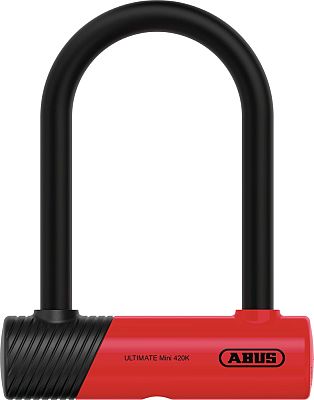
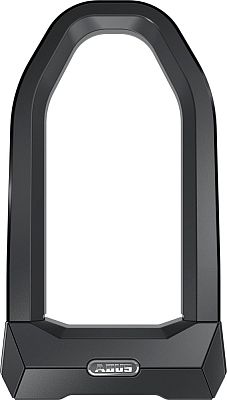
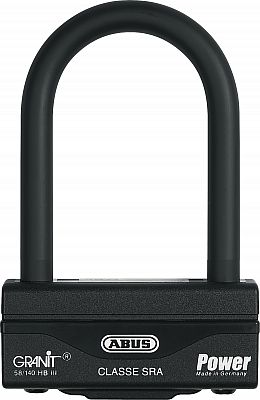
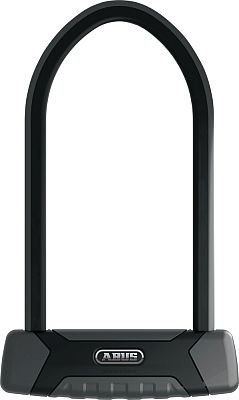
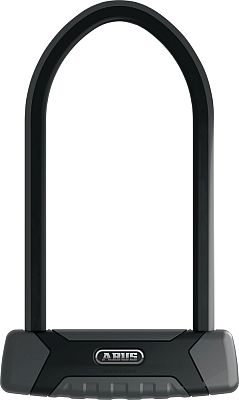
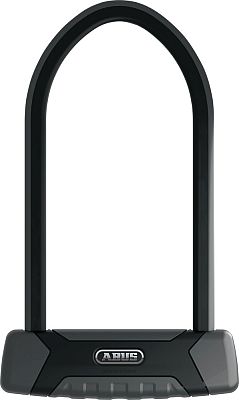
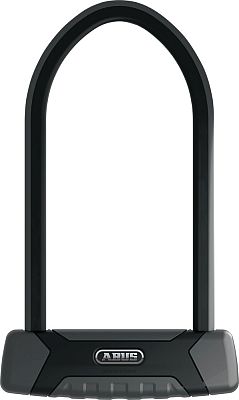
Description: The U-lock is the king of security. It consists of a solid, hardened steel shackle and an equally robust lock body. Its strength lies in the quality of the material and the fact that its rigid U-shape offers little surface area for tools such as bolt cutters to attack.
The new generation: locks that can withstand angle grinders
Until now, the biggest threat to any lock was the battery-powered angle grinder. The latest generation of high-end U-locks is countering this threat with revolutionary materials.
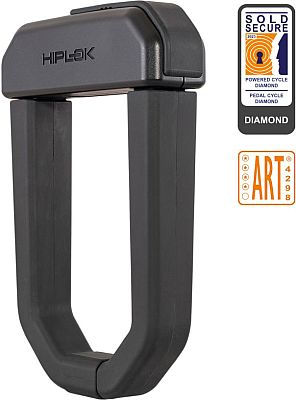
Product examples: Hiplok D1000 U-lock
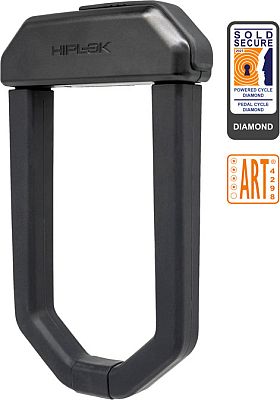
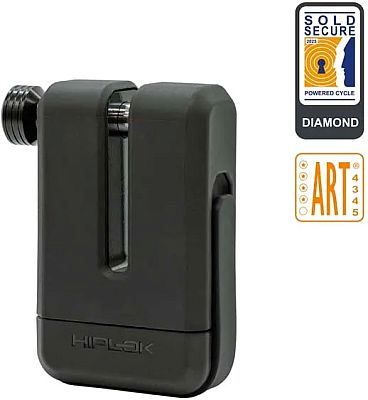
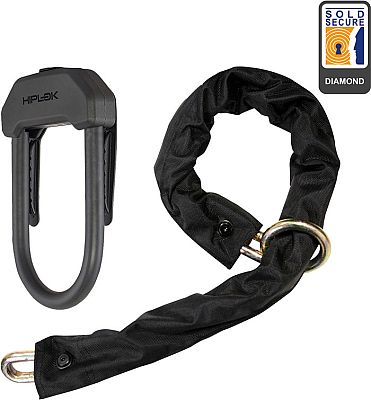
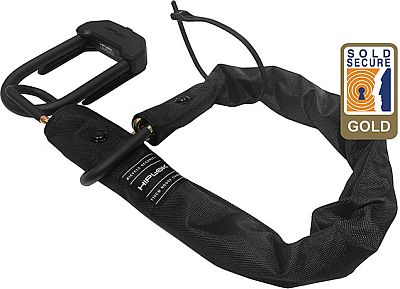
The Hiplok D1000 U-lock is the first mobile lock that, thanks to a graphene composite coating, is proven to be resistant to attack with an angle grinder. It is the ultimate in mobile security.
Product examples: Abus Granit Super Extreme U-lock
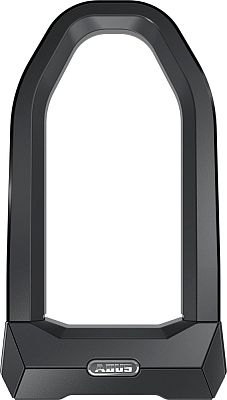
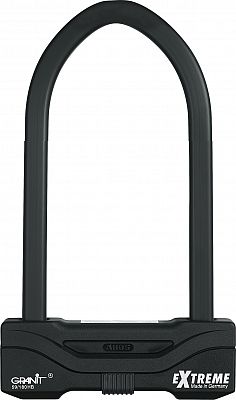
The Abus Granit Super Extreme U-lock uses special tungsten carbide inserts that destroy the cutting blade of an angle grinder—an extremely effective defense.
Ideal for: cyclists looking for maximum security in a portable form.
The chain lock: Flexibility meets enormous strength
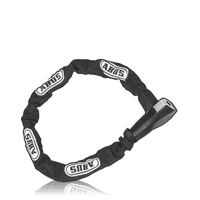
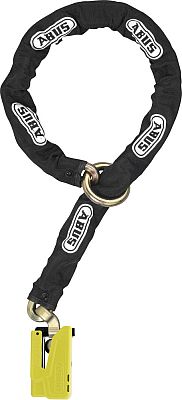
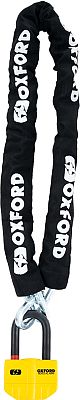
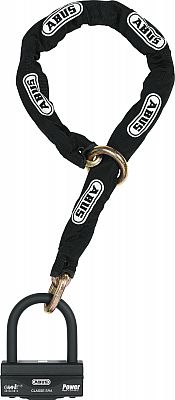
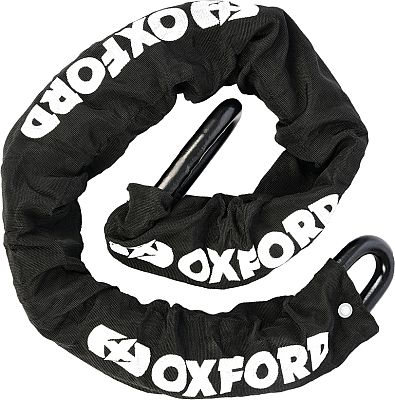
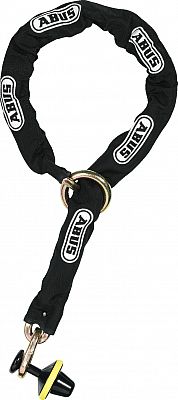
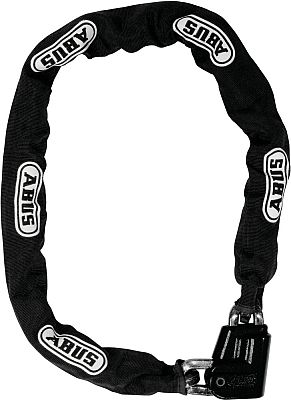
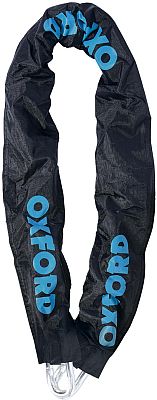
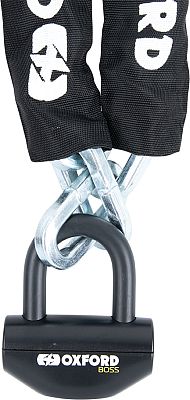
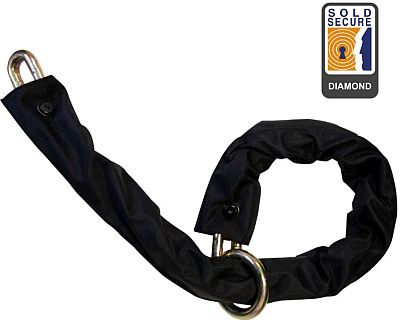
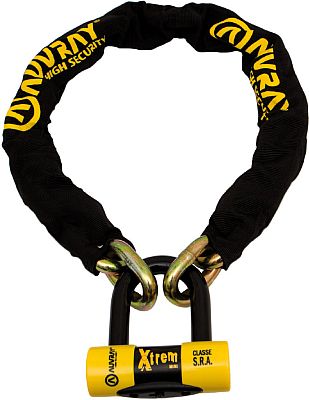
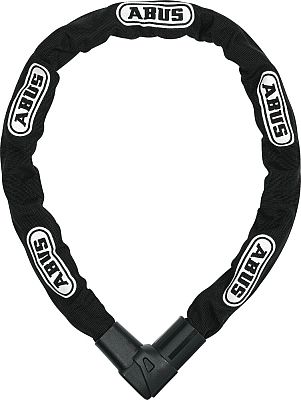
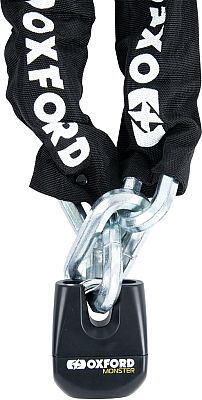
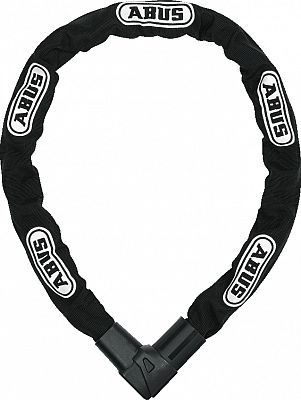
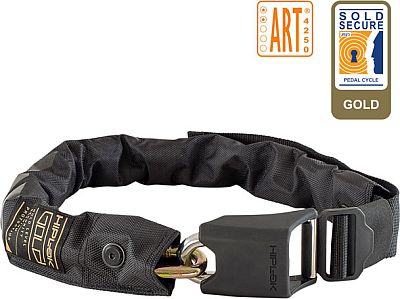
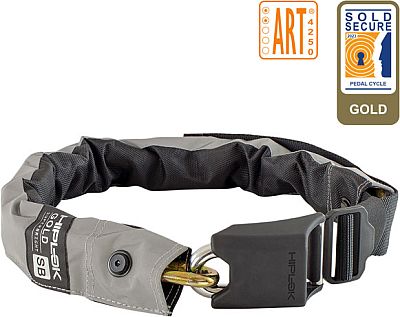
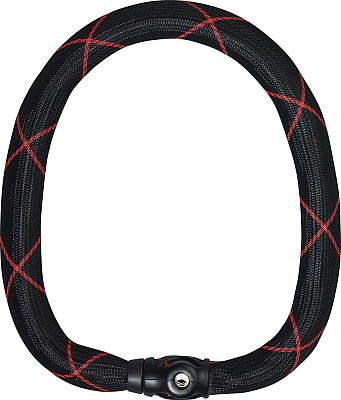
Description: A chain lock is the best solution for securing your motorcycle to a fixed object (lamppost, fence, anchor) and preventing it from being stolen. It consists of a chain with solid links made of hardened special steel and a separate or integrated lock body.
What matters when it comes to chains:
Thickness of the chain links: the thicker, the better. Chains with a link thickness of 10 mm or more offer good protection against concrete cutters. High-end chains have a thickness of 12, 14, or even 16 mm. Square or hexagonal chain links offer a bolt cutter less surface area to attack than round links.
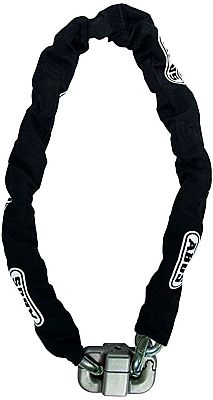
Product example: Abus Granit X-Plus 4900
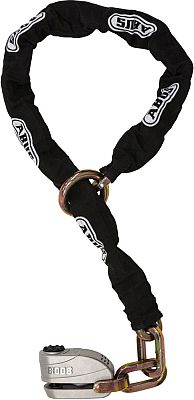
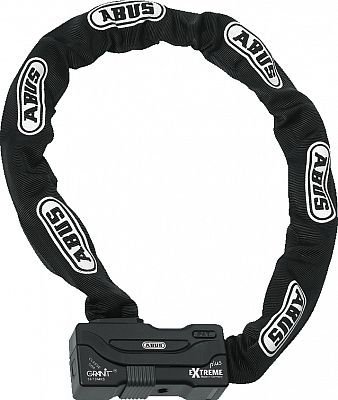
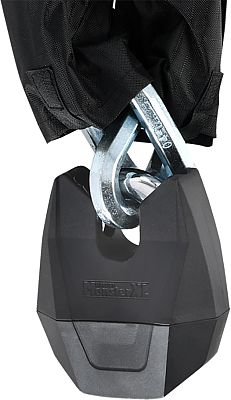
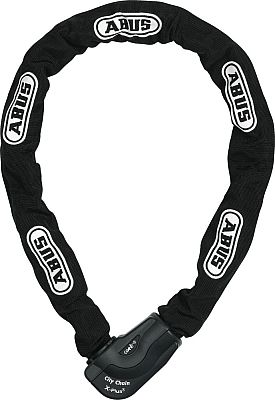
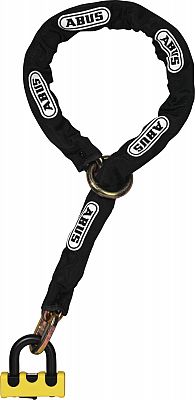
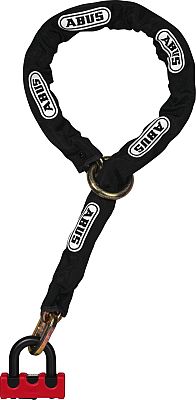
The Abus Granit X-Plus 4900 chain lock is a combination of a 14 mm thick chain and an extremely secure disc lock – a fortress for your garage at home.
The disc lock: the small, noisy guard
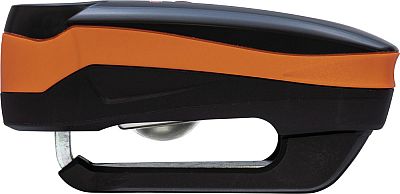
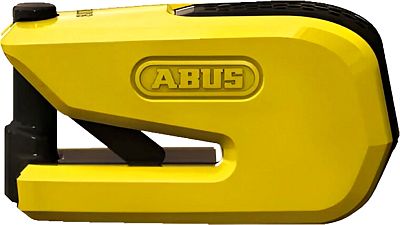
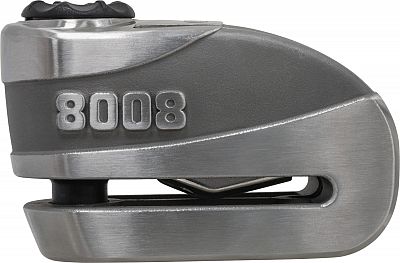
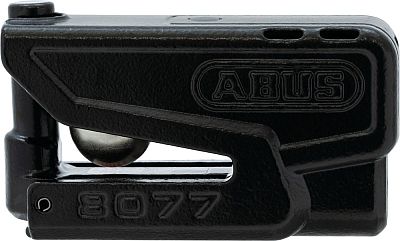
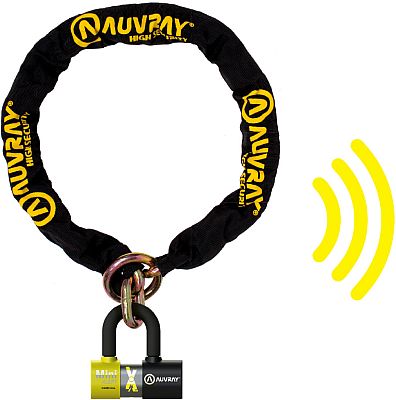
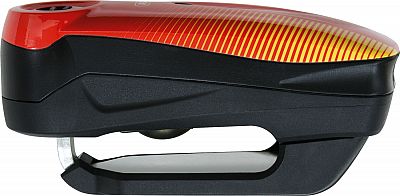
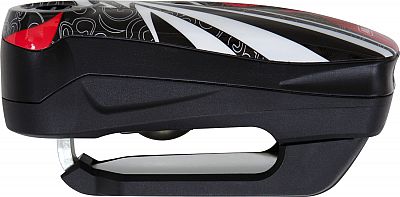
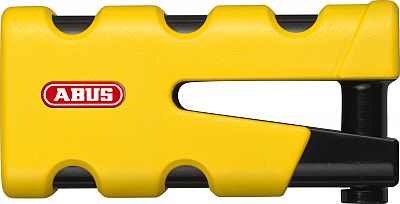
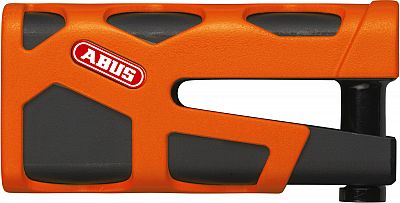
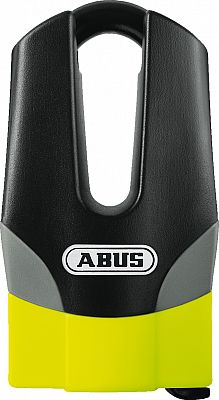
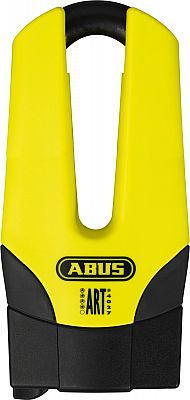
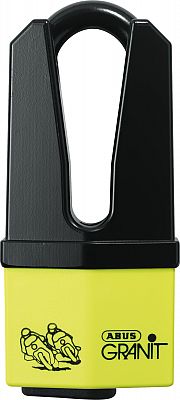
Description: An extremely compact lock that attaches directly to the brake disc, preventing the motorcycle from being driven away. Many modern brake disc locks have an integrated alarm system that activates a deafening alarm when vibrations are detected.
Advantage: small, light, easy to carry.
Disadvantage: does not prevent the motorcycle from being taken away in a van.
The cable lock: flexible protection for your accessories
Description: A lightweight cable lock is not a primary theft deterrent for your motorcycle. The steel cable can easily be cut with bolt cutters. Its strength lies elsewhere.
Ideal use: It is the perfect, lightweight companion for securing your accessories during a short break. You pull the cable through the sleeve of your expensive jacket, through the chin guard of your helmet, and attach it to the frame.
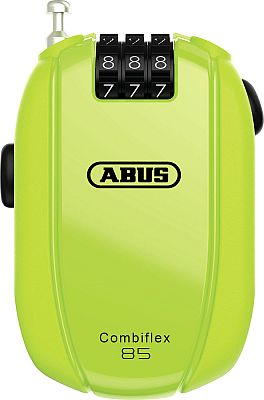
Product example: Abus Combiflex TravelGuard cable lock
The Abus Combiflex TravelGuard cable lock is so small and light that it fits in any pocket—the perfect solution to always have with you for your equipment.
The padlock: The heart of the chain lock
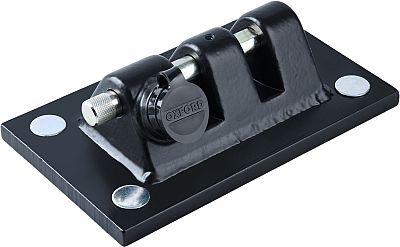
Description: A solid padlock is often the actual lock body used in combination with a separate chain or ground anchor. It incorporates all the cylinder lock technology.
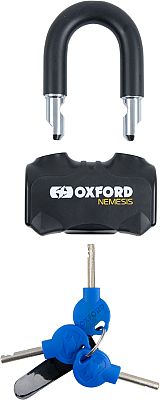
Product example: Oxford Nemesis padlock
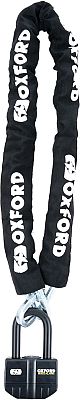
The Oxford Nemesis padlock is a high-quality padlock with a 16 mm shackle made of hardened steel, which serves as the core of a solid security chain.
FAQ: frequently asked questions about theft protection for motorcycles
1. What is the most secure motorcycle lock?
The most secure mobile locks currently available are bow locks that are resistant to angle grinders, such as the Hiplok D1000. For stationary security, a combination of a solid chain lock (14 mm+), a high-quality lock, and a ground anchor is the most secure solution.
2. How do I secure my motorcycle properly?
The golden rule is: always secure it to a fixed, immovable object! Pass the lock through the frame or rear swing arm (never just through the wheel!) and secure it to a lamppost, fence, or fixed bike rack.
3. Is a lock with an alarm system worth it?
Yes. A loud alarm attracts attention and causes extreme stress for the thief, greatly increasing the chance that they will give up.
4. Does insurance always pay out in the event of theft?
That depends on your insurance policy. Many insurers require at least the use of a standard steering lock. Some limited comprehensive insurance policies offer discounts or lower deductibles if you can prove that you use a certified, high-quality lock.
5. What does the ART or SRA certificate mean for locks?
These are independent testing institutes (ART in the Netherlands, SRA in France) that subject locks to extremely rigorous break-in tests. A lock with a high ART rating (e.g., ART 4 stars) offers a demonstrably high level of security.
6. Which is better: a chain lock or a U-lock?
U-locks are stiffer and more resistant to concrete cutters, but less flexible when securing. Chain locks are extremely flexible and can be more easily wrapped around thick posts, but are often heavier.
7. Should I cover my motorcycle with a tarpaulin?
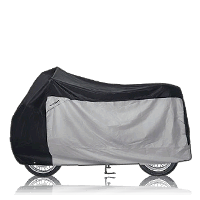
Yes, absolutely! A cover not only protects against the weather, but also against prying eyes. A thief who does not know what valuable motorcycle is under the cover will often not even try.
8. Isn't a steering lock sufficient?
No. An experienced thief can break a steering lock in seconds with a well-aimed kick or tug. It offers only minimal protection.
9. Where is the best place to carry my heavy lock?
A heavy chain or U-lock should never be carried in a backpack! In the event of an accident, this can lead to serious injury to the spine. It is best to transport the lock in a suitcase, a top case, or securely tied to the passenger seat.
10. What is a “memory cable” on a disc lock?
It is a thin, spiral-shaped cable in a striking color that you stretch from the brake disc lock to the handlebars. It reminds you to remove the lock before driving away, thus preventing expensive damage to the brake caliper or fork.
Conclusion: make it difficult for thieves
Your motorcycle is your passion and your pride and joy. Give it the protection it deserves. Investing in a high-quality, certified lock is not an expense, but the best and cheapest insurance against the financial and emotional nightmare of theft. Always remember: it's about making it as difficult, as noisy, and as time-consuming as possible for the thief. Secure what you love.
Table of contents