





































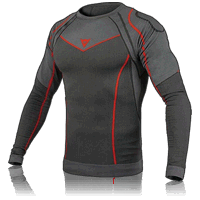


Heated clothing


Filter & sort
Sortierung
Heated motorcycle clothing: your ultimate guide to beating the cold
Winter. For many motorcyclists, this means the end of the season, putting their bike in storage, and waiting months for the first warm rays of sunshine. But what if you didn't have to end the season at all? What if you could control the temperature yourself and get on your bike feeling warm and cozy, even in sub-zero temperatures? Welcome to the world of heated motorcycle clothing—the ultimate revolution for motorcyclists who ride year-round and the best weapon in the fight against the cold.
Forget everything you know about thick, bulky layers of clothing. Passive insulation can only slow down your body's heat loss. Heated clothing, on the other hand, actively generates heat. It's your personal, portable heater that provides comfortable temperatures exactly where you need them most at the touch of a button. In this ultimate guide, we take you through the fascinating technology of active heat. We explain how the systems work, which garments have the greatest effect, and how to put together the perfect setup for absolute independence from the weather.

The heat revolution: how does heated motorcycle clothing work?
Heated clothing is not magic, but the result of intelligent engineering. The principle is essentially identical for all manufacturers and is based on three main components.
1. The heating elements: invisible heat sources
The heart of the system consists of ultra-thin, flexible heating elements made of micro carbon fibers, which are incorporated directly into the fabric. These fibers are so fine and flexible that you cannot feel them when wearing the garment. When an electrical current is applied, they heat up and emit a deep, even infrared heat to your body. They are strategically placed in the areas most sensitive to the cold: on the fingers and back of the hand in gloves, on the chest and back in vests, or on the toes in socks.
2. The power source: battery or vehicle electrical system?
There are two main methods of supplying power to the heating elements:
Mobile lithium-ion batteries: maximum flexibility
This is the most common and flexible solution. Small, lightweight, rechargeable Li-ion batteries are stored in special pockets directly on the garment (e.g., in the cuff of the glove or in the inner pocket of the vest).
Advantage: you are completely self-sufficient, you can also use the clothing outside of the motorcycle (e.g. while skiing or at the Christmas market) and you don't have to worry about cables.
12V connection to the vehicle battery: unlimited power supply
For extreme touring riders, there are systems that connect directly to the motorcycle's 12V battery.
Advantage: virtually unlimited heating time as long as the engine is running. Often, multiple items of clothing (e.g., jacket, pants, gloves, socks) can be connected to each other via a single cable system and supplied with power.
3. Operation: warmth at the touch of a button
The heating power is almost always adjustable, so you can adapt it to the outside temperature and your personal preference.
Controls on the garment: A rubber button that can be easily operated even when wearing gloves and is located directly on the vest or glove usually allows you to choose between 2-3 heating settings.
Control via app: Premium systems, such as those from Lenz, can be connected to your smartphone via Bluetooth. An app allows you to control the temperature continuously and even separately for each side.
Your personal heating system: the most important types of heated clothing
You don't have to be heated from head to toe. A single, strategically chosen garment can revolutionize your winter comfort.
Heated gloves: the absolute priority
Description: Your hands are most exposed to the wind while riding and cool down the fastest. Cold, stiff fingers pose a huge safety risk because they severely impair your sense of the throttle, brakes, and clutch. Heated gloves are therefore by far the most important and effective part of heated clothing. The heating elements often cover each individual finger and the back of the hand.
Product example: Lenz Heat Glove 6.0 Finger Cap gloves
Lenz's patented “Finger Cap” technology not only warms the fingers from above, but also completely encloses the fingertips – for unparalleled all-round warmth.
Product example: Lenz 5.0 heated gloves
Another top model that shows how inconspicuously high-tech heating can be integrated into a fully-fledged, protective motorcycle glove.
Heated vests: Warmth for the torso
Description: The second most important area is your torso. If your core is warm, your body will continue to pump warm blood to your limbs. A heated vest is worn as a mid-layer under your motorcycle jacket and provides targeted heating to the sensitive kidneys, back, and chest. It is the perfect complement to heated gloves.
Product example: Lenz Heat Vest 1.0 vest
A thin, flexible vest that is barely noticeable and provides comfortable core warmth with its large heating elements on the back and near the kidneys.
Product example: Macna Cloud functional vest
This vest is part of Macna's modular system and can be zipped directly into designated jackets, ensuring perfect integration without shifting.
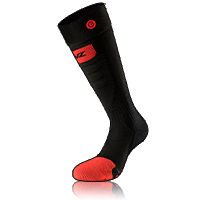
Heated socks: no more freezing feet in your boots
Description: Just like your hands, your feet quickly get cold in thick, poorly ventilated boots. Heated socks are the solution. The heating elements are usually integrated into the toes and the ball of the foot. The batteries are easily attached to the edge of the sock.
Product example: Lenz Heat Sock 5.1 Toe Cap socks
They also use “Toe Cap” technology, which heats the entire toe area from above and below, effectively preventing cold feet.
FAQ: Frequently asked questions about heated motorcycle clothing
1. Are heated gloves really worth it?
Yes, absolutely. For anyone who rides in temperatures below 10°C, they are the biggest gain in comfort and safety you can buy. Warm fingers mean better control and faster reactions.
2. Are heated gloves better than heated grips?
They heat differently and are often more effective. Heated grips only warm the palm, while the top of the hand and fingertips, which are exposed to the wind, remain cold. Heated gloves warm the entire hand.
3. How long do the batteries last?
That depends greatly on the selected heating setting. At the lowest setting, the batteries often last 8-10 hours, at the highest setting usually 2-3 hours. That is usually sufficient for day trips.
4. Is heated clothing safe? Is there a risk of short-circuiting?
The systems are completely safe. They operate at a low voltage that is not dangerous and are completely sealed against moisture and short-circuiting.
5. Can I wash the clothing?
Yes, most fabrics are washable. You just need to remove the batteries first. The heating elements and electronics are so robust that they can withstand a gentle wash cycle without any problems. Always follow the manufacturer's instructions.
6. Can you feel the heating wires when wearing the clothing?
No. Modern carbon heating fibers are so thin and flexible that you cannot feel them.
7. Can I combine batteries from different manufacturers?
No, under no circumstances. Always use only the original batteries and chargers from the respective manufacturer to ensure safe operation.
8. Which is better: a heated vest or a heated jacket?
A vest is often the more flexible solution. It heats the crucial torso area while offering complete freedom of movement for the arms. It is less bulky and fits under almost any jacket.
9. Can I charge the batteries while riding?
Not directly with most systems. However, you can bring a spare pair of batteries and change them during a break or charge them using a power bank in your tank bag.
10. How do I store the batteries during the summer?
Preferably store the batteries in a cool, dry place with a charge level of approximately 50-60%. Charge them briefly every few months to prevent deep discharge.
Conclusion: take control of the cold yourself
Heated motorcycle clothing is not a luxury, but a smart technology that gives you the freedom to ride when you want, not when the thermometer allows. It is an active investment in your safety, because warm muscles react faster, and in your comfort, because cold is the biggest spoilsport during any ride.
Stop freezing and extend your season.
Table of contents