

































Communication































































































































Filter & sort
Sortierung
Motorcycle Communication Systems: Your Ultimate Guide to Headsets, Intercoms, and Networks
The days when riding a motorcycle meant disappearing into your helmet, alone and cut off from the world, are definitely over. Modern communication technology has radically changed the way we ride. It has made trips with friends safer, more fun, and more social. Today, a motorcycle headset is much more than just a simple intercom. It is your command center on your helmet: a crystal-clear intercom for talking to your fellow passengers, a hands-free system for important phone calls, your personal sound system for the perfect soundtrack to your ride, and the receiver for accurate directions from your navigation system.
But the market is full of technologies, standards, and systems whose differences are often confusing. What exactly is the difference between Bluetooth and mesh intercom? Which system is best for me as a solo rider, for riding with a passenger, or for a large group ride? And how do I best integrate a headset into my helmet? In this ultimate guide, we answer all your questions. We take you into the world of digital motorcycle communication, explain the most important technologies in a simple way, and help you find exactly the system that connects you perfectly to your world.

The core technology: Bluetooth vs. Mesh – which is right for you?
This is the most fundamental decision when purchasing a communication system. It determines how you communicate with other drivers and how stable the connection is.
Bluetooth intercom: the proven standard for small groups
How it works
Imagine a string of pearls. With Bluetooth intercom, all drivers are connected to each other in a linear chain (“Daisy Chain”). Driver A is connected to B, B is connected to C, C is connected to D, and so on.
Advantages & disadvantages:
Advantage: cheaper to purchase, extremely energy efficient, perfect for communication between driver and passenger or a small group of 2-4 people.
Disadvantage: the chain is only as strong as its weakest link. If a driver in the middle loses connection (e.g. due to excessive distance), the entire chain behind him is broken.
Ideal for whom?
For solo riders who want to connect their cell phone and navigation system, for couples, and for small, fixed groups who usually ride within each other's field of vision.
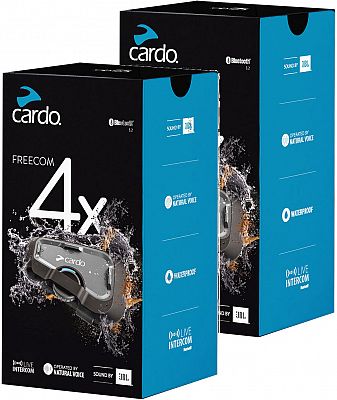
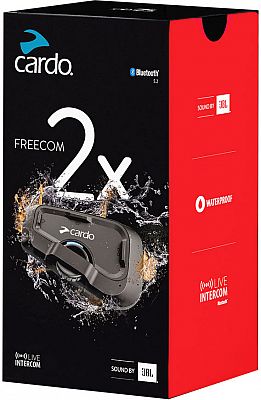
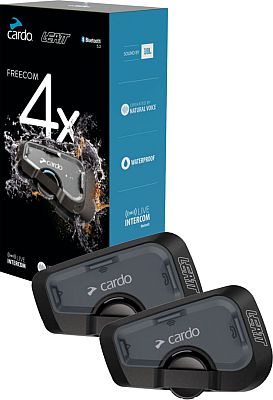
Product example: Cardo Freecom 4x
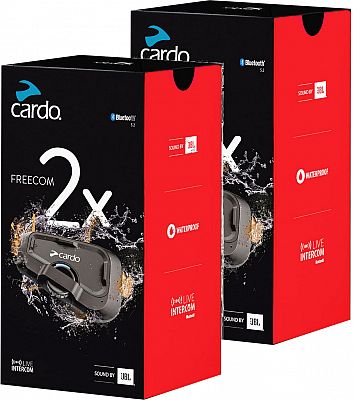
The Cardo Freecom 4x is an absolute premium Bluetooth system with features such as JBL sound and live intercom, which automatically reconnects.
Mesh Intercom: the revolution for large groups
How it works
Imagine a spider web. With Mesh Intercom, every motorcyclist is not only connected to the motorcyclist in front and behind them, but also to every other motorcyclist in the network. This creates a dynamic, self-healing network.
Advantages & disadvantages:
Advantage: extremely stable connection. If a rider leaves the group or loses connection, the rest of the group remains seamlessly connected. The range of the entire group is significantly greater. Perfect for groups of 4 to 16 or more riders.
Disadvantage: more expensive to purchase and uses slightly more battery power than pure Bluetooth.
Ideal for whom?
For anyone who regularly rides in larger, dynamic groups, for guides, instructors, and anyone who wants the most stable and flexible connection.
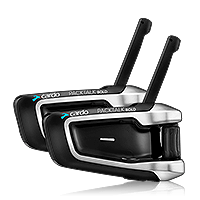
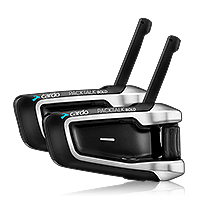
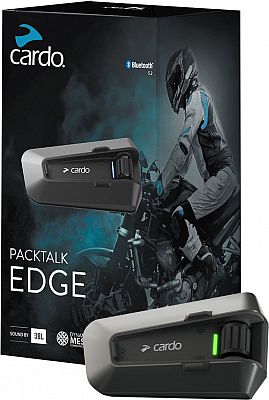
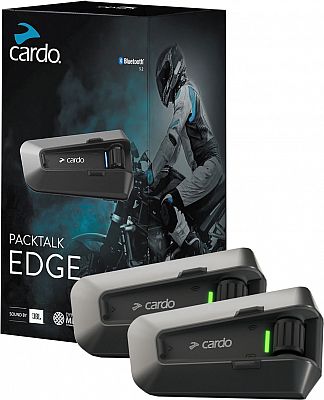
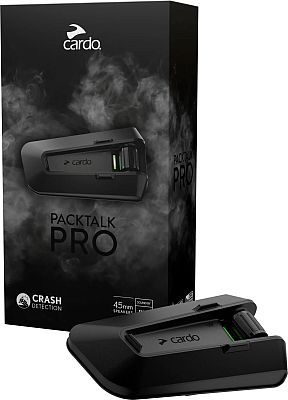
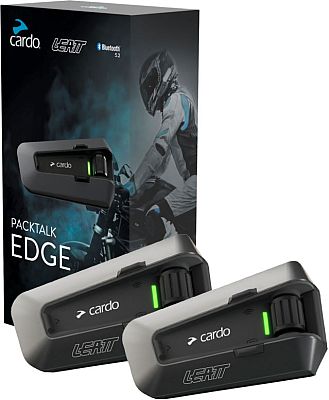
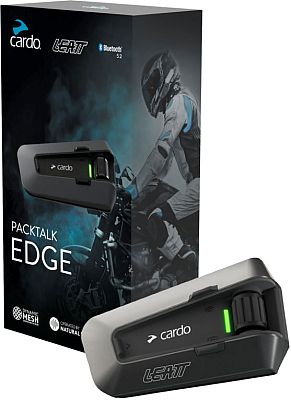
Product example: Cardo Packtalk Edge
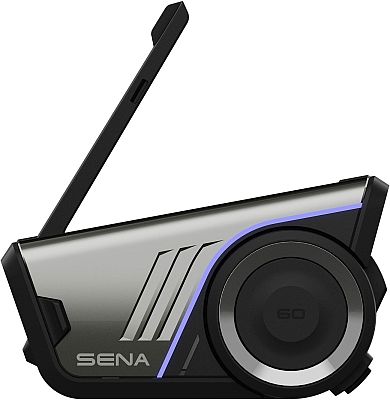
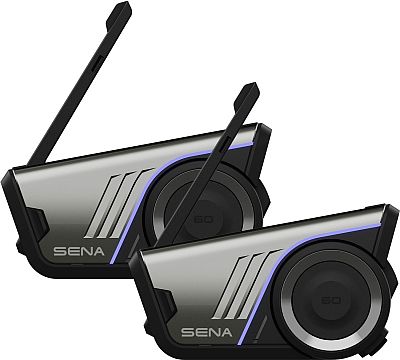
The Cardo Packtalk Edge with its second-generation Dynamic Mesh Communication (DMC) is one of the benchmarks on the market for large groups. The Sena 60S is Sena's latest flagship and promises even better mesh performance.
The different systems: universal, integrated, or minimalist?
In addition to technology, design is also crucial.
Universal communication systems: maximum flexibility
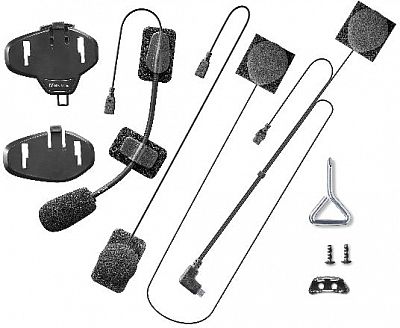
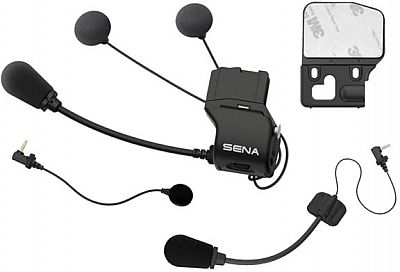
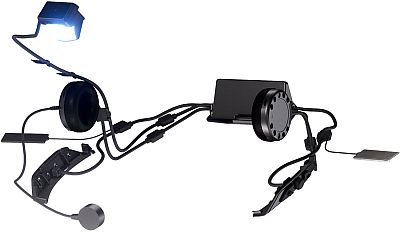
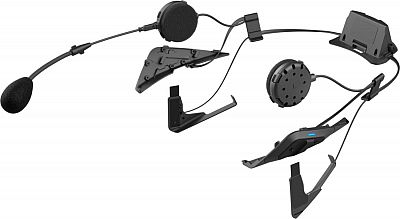
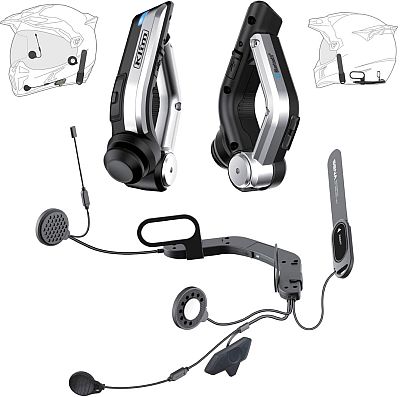
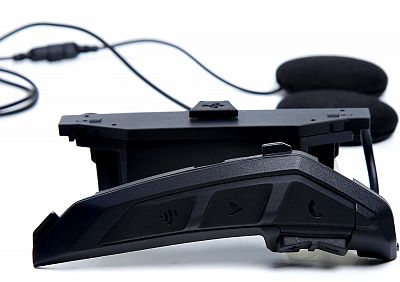
Description: This is the most common type. A universal system consists of an external control unit that is attached or clamped to the side of the helmet, and speakers and a microphone that are placed inside the helmet.
Advantage: You can mount the system on almost any helmet and easily take it with you when you change helmets.
Product example: Cardo Packtalk Edge
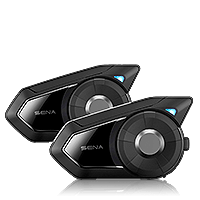
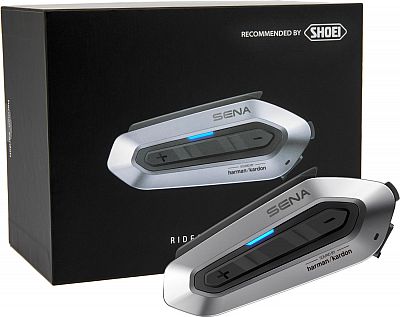
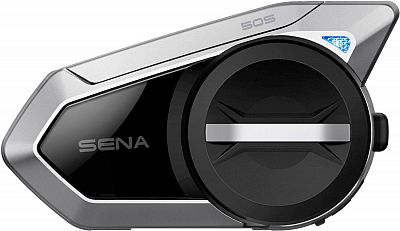
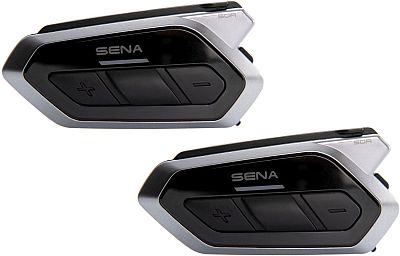
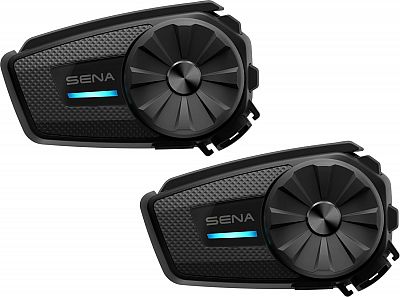
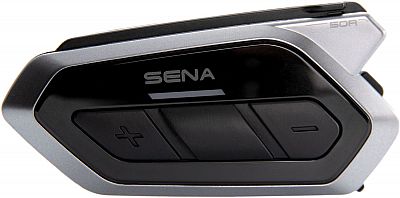
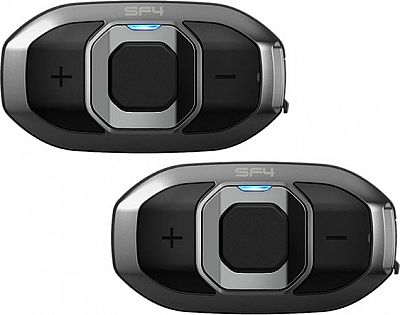
The Cardo Packtalk Edge and the Sena 50S are perfect examples of universal high-end devices.
Product example: Sena 50S
The Cardo Packtalk Edge and the Sena 50S are perfect examples of universal high-end devices.
Helmet-specific (integrated) systems: Invisible perfection
Description: Some helmet manufacturers work closely with electronics specialists to develop communication systems that fit perfectly and almost invisibly into the recesses of their helmets.
Advantage: No noticeable unit on the outside, which improves aerodynamics and appearance. Installation is often child's play and the acoustics are perfectly tuned to the helmet.
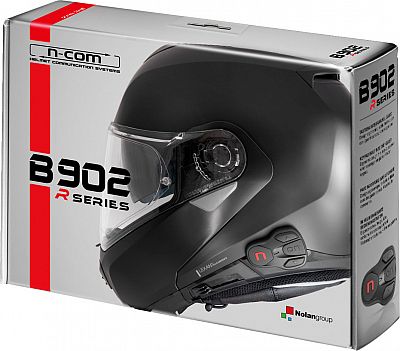
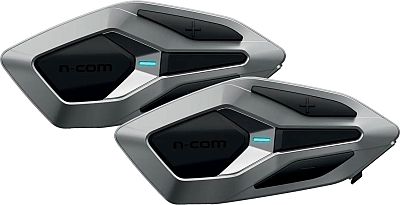
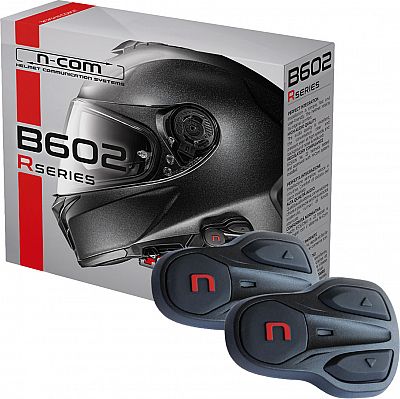
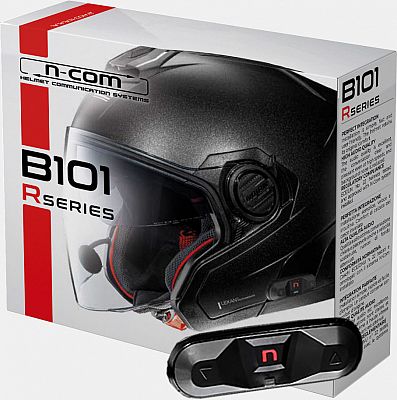
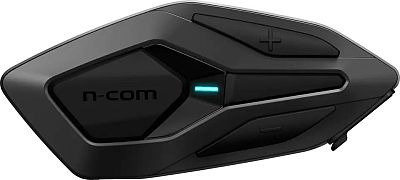
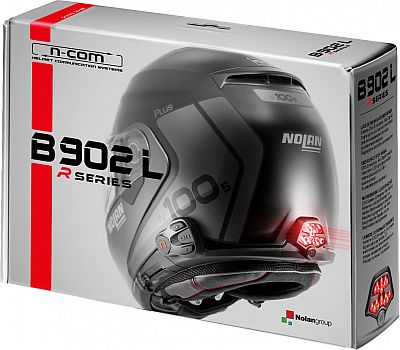
Product example: Nolan N-Com B902 R
The Nolan N-Com B902 R series is specially designed for integration into compatible Nolan helmets and fits seamlessly into the helmet shell. The Shoei SRL3 for Shoei helmets is another such system.
Minimalist systems: focus on the essentials
Description: For motorcyclists who do not need a group intercom function, but are only looking for a simple and unobtrusive connection to their smartphone for music and navigation instructions or for their passenger.
Advantage: Very unobtrusive, often without an external control unit and very easy to operate.
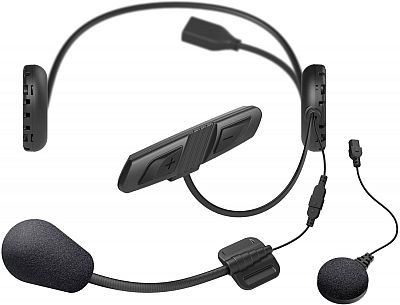
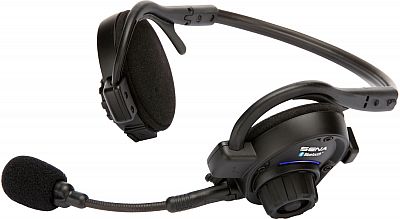
Product example: Sena 3S Plus Universal
The Sena 3S Plus Universal is a good example. All the technology is integrated into the speakers and controlled via a simple two-button unit on the microphone.
FAQ: Frequently asked questions about motorcycle communication systems
1. What is the best headset for motorcycles?
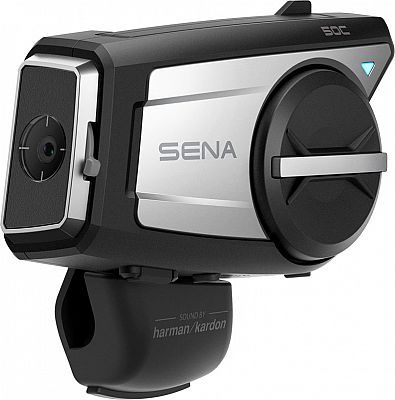
The “best” headset depends on your needs. For large groups, mesh systems such as the Cardo Packtalk Edge or the Sena 50S/60S are superior. For two-way communication, a high-end Bluetooth system such as the Cardo Freecom 4x is excellent.
2. Is it permitted to ride a motorcycle with a headset in your helmet?
Yes, the use of communication systems for talking, navigating, or listening to music is permitted in Germany. It is important that the volume is set so that you can still hear ambient sounds and warning signals (e.g., sirens).
3. Can I connect a Sena to a Cardo system?
Yes. Thanks to the “Universal Intercom Pairing” feature, almost all modern Bluetooth headsets from different brands can be paired with each other. However, the manufacturer-specific mesh networks are not compatible with each other.
4. What is the advantage of speakers from JBL or Harman Kardon?
Brands such as Cardo (with JBL) and Sena (with Harman Kardon) collaborate with renowned audio specialists. The result is speakers with significantly better sound quality, richer bass, and clearer treble—a huge advantage when listening to music.
5. How long does the battery of a communication system last?
Modern devices offer a pure talk time of 8 to over 13 hours, which is sufficient for a whole day trip. The standby time is often several days.
6. Can I listen to music and talk at the same time while riding?
Yes, this is called “audio multitasking.” High-end devices can keep the intercom connection open in the background while you listen to music or navigation instructions. During a call, the music is automatically turned down.
7. How difficult is it to install the system in the helmet?
Installation is very easy with modern helmets. Almost all helmets nowadays have recesses for the speakers and well-designed cable routing. Installation usually takes no longer than 15-20 minutes.
8. Does voice control really work well?
Yes, the voice control on the top models from Sena and Cardo works amazingly well. With simple commands such as “Hey Cardo, music on” or “Hey Sena, next song,” you can operate the most important functions without taking your hands off the handlebars.
9. What is the difference between a gooseneck microphone and a cable microphone?
The gooseneck microphone is rigid and is placed in front of the mouth in flip-up and jet helmets. The small cable microphone is attached to the chin piece of a full-face helmet with Velcro. Most systems come with both microphone types.
10. Can I also use my system in the rain?
Yes, all high-quality communication systems from brands such as Sena, Cardo, or Nolan are certified according to standards such as IP67 and are therefore completely waterproof and dustproof.
Conclusion: connect with your passion
A communication system is one of the most rewarding investments you can make in your motorcycling experience. It makes group rides safer and more enjoyable, guides you flawlessly to new places, and provides the soundtrack for unforgettable moments. It connects you not only to your friends, but also to your digital life, without you having to take your hands off the handlebars.
Find the system that suits you and discover a new dimension of motorcycling.
Table of contents