































Cameras









Filter & sort
Sortierung
Motorcycle cameras & dashcams: your guide to unforgettable footage & increased safety
Every journey tells a story. The epic mountain pass at sunrise, the winding country road with your friends, the unforgettable moment when you first saw the ocean on the horizon. What if you could capture these moments not only in your memory, but also in razor-sharp 4K quality forever? At the same time, traffic on the road has become more unpredictable. What if you had an incorruptible digital witness that recorded every second of your ride and testified for you in case of an emergency? Welcome to the fascinating world of motorcycle cameras—the technology that documents your passion while revolutionizing your safety.
Modern motorcycle camera technology has developed rapidly and is now divided into two main categories: the classic action camera for spectacular shots and the increasingly important motorcycle dashcam, which is often integrated into complex driver assistance systems. In this ultimate guide, we'll walk you through both areas. We explain what makes a good camera, introduce you to the latest intelligent systems, and help you find the perfect solution for capturing your adventures and making every ride safer.

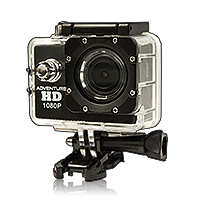
The action camera – become the director of your adventure The action camera is the classic tool for capturing the dynamics and emotions of motorcycling. It is robust, compact, and built for intensive use.
What is important for a good action camera
Image quality: resolution and frame rate (FPS)
Resolution: 4K is currently the gold standard and delivers breathtakingly sharp videos.
Frame rate (frames per second): a high frame rate of 60 FPS (or more) is crucial for capturing the fast movements of motorcycling smoothly and without jerkiness. It also enables impressive slow-motion shots.
Image stabilization: the secret to stable shots
This is perhaps the most important feature. A motorcycle vibrates and moves a lot. Excellent electronic or mechanical image stabilization (often called “HyperSmooth” or “RockSteady”) is essential for getting stable, professional-looking video instead of shaky chaos.
Robustness and water resistance
A good action camera is inherently robust and splash-proof. For use in heavy rain, an additional waterproof housing is often required.
The smart fusion: the communication system with integrated camera
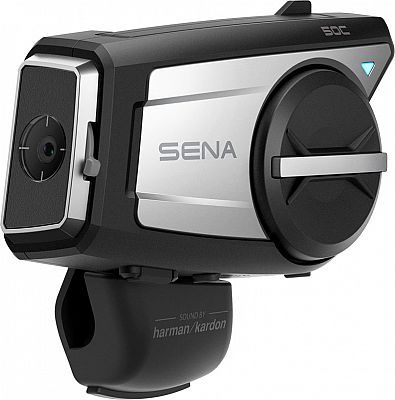
Description: Why attach two devices to your helmet when one is enough? The smartest solution for many vloggers and touring riders is to combine a communication system and a camera in a single device.
Advantages: You can film your ride and, at the same time, record your thoughts and comments live (voice-over), talk to friends, or listen to music at the touch of a button. Operation is simple via the unit on the helmet.
Product example: Sena 50C Harman Kardon
The Sena 50C Harman Kardon is the benchmark in this class. It combines Sena's high-quality mesh and Bluetooth communication with a full-fledged 4K camera and Harman Kardon's first-class sound.
The dashcam & driver assistance systems – your digital guardian angel
While the action cam is there for the good times, the dashcam is designed for the bad times. Its job is to record continuously and serve as irrefutable evidence in case of an emergency.
Why a dashcam on your motorcycle is becoming increasingly important
Traffic is getting busier and distractions from smartphones in cars are also on the rise. As a motorcyclist, you are the most vulnerable road user. A dashcam that continuously records traffic can be invaluable in the event of an accident that is not your fault, as it can conclusively demonstrate the course of the accident to the police and your insurance company.
Important: The legal situation: in Germany, the use of dashcams is permitted as long as they record in a “loop procedure” (the oldest recordings are permanently overwritten) and the recordings are only stored and used on specific occasions (after an accident).
The evolution: integrated driver assistance systems
Modern systems are much more than just cameras. They are intelligent co-pilots that actively warn you of dangers.
The structure
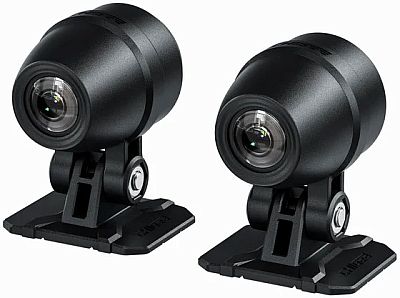
These systems usually consist of a central control unit, a display for the cockpit, and a camera at the front and rear. They are permanently mounted on the motorcycle and connected to the on-board electronics.
The functions
Continuous recording (dashcam): the front and rear cameras record continuously in a loop. In the event of heavy braking or a collision, the current recording is saved securely.
Blind spot detection (BSD): The rear view camera monitors the blind spot. If a vehicle approaches from behind, you are warned by a visual signal on the display or in the mirrors.
Smartphone integration: Many systems offer Apple CarPlay or Android Auto and mirror your mobile phone on the waterproof, glove-operable display.
Product example: Chigee AIO-6 LTE 4G
The Chigee AIO-6 LTE 4G is a complete system that combines navigation, dashcam, and blind spot assist in one smart display.
Product example: Interphone Sync 70
The Interphone Sync 70 also offers a complete package with CarPlay display and integrated dual dashcam.
Accessories and mounts
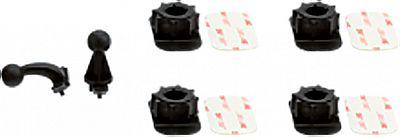
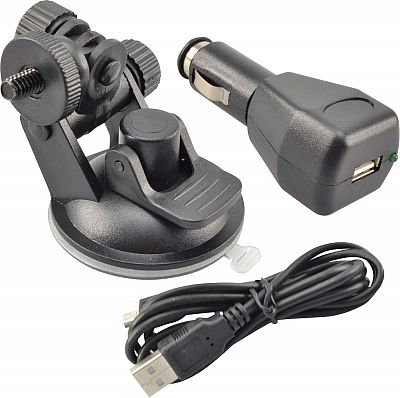
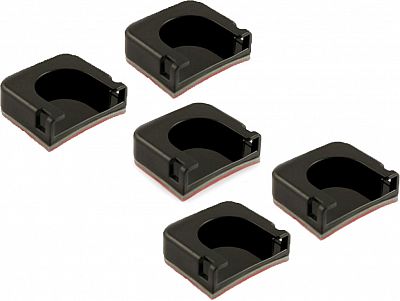
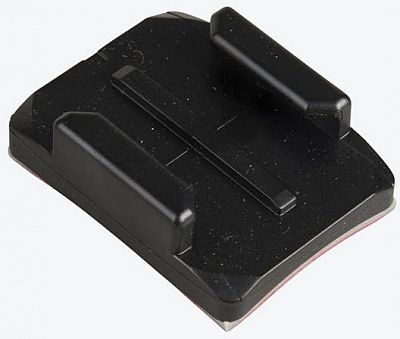
The basis for perfect shots A camera is only as good as its mount. A wobbly mount inevitably leads to unusable shots.
The right position: where do you mount a camera on a motorcycle?
The most popular positions are the helmet (for a dynamic first-person perspective), the handlebars, or bodywork parts.
Stability is everything
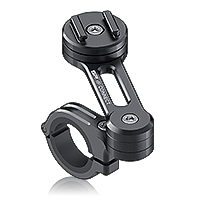
Always use high-quality mounts that are specifically designed for use on motorcycles. Cheap plastic mounts can break due to vibrations.
FAQ: Frequently asked questions about motorcycle cameras
1. Is a camera on a motorcycle helmet permitted?
Yes, attaching a camera (e.g., GoPro) to the helmet is generally permitted in Germany. It is important that the attachment does not impair the protective function of the helmet (so no drilling!) and that there are no sharp parts protruding that could increase the risk of injury. Attachments that are glued or secured with straps are the usual method.
2. What is the best position for an action camera?
That depends on the desired effect. On the helmet: very dynamic “point-of-view” perspective. On the chest: more stable image, shows handlebars and dashboard. On the motorcycle (e.g., crash bar): deep, dramatic perspective that emphasizes speed.
3. What is the difference between an action camera and a dashcam?
An action camera is designed for manually capturing special moments. A dashcam is a “set-and-forget” system that continuously records in a loop to serve as evidence.
4. Can I use my action camera as a dashcam?
Yes, most modern action cameras have a “loop recording” mode. The disadvantage is that you have to start them manually for each trip and that the battery often does not last long enough for long trips. A permanently installed system is more convenient.
5. How do I protect my recordings from being overwritten after an accident?
Good dashcams and driver assistance systems have a G-sensor. This detects a collision and automatically saves the current video file as read-only so that it cannot be overwritten.
6. Are permanently installed camera systems very complicated to install?
The installation requires some technical skill, as the cameras and the central unit must be placed on the motorcycle and connected to the on-board electronics (ignition plus). However, a specialized workshop can do this without any problems.
7. What does “HDR” mean in relation to a camera?
HDR stands for “High Dynamic Range.” An HDR camera can display both very bright and very dark areas of the image well. This is very important when riding a motorcycle, for example when you drive out of a dark tunnel into bright sunlight.
8. Do these systems consume a lot of power from my motorcycle battery?
No. The power consumption is very low. The systems are designed so that they do not discharge the battery, even during longer periods of inactivity.
9. Can I view the videos directly on my mobile phone?
Yes, almost all modern cameras and systems have a Wi-Fi interface. You can connect to the system via an app to view and download recordings and change settings.
10. Is a system with a rearview camera worthwhile?
Absolutely. A rearview camera not only serves as a dashcam for what's happening behind you, but in systems with blind spot assist, it's also an active safety feature that alerts you to hazards you might overlook in the mirror.
Conclusion: become the creator of your memories and the architect of your safety
A camera on your motorcycle is much more than a gadget these days. It is an incredibly versatile tool that meets two of your most important needs as a motorcyclist: the desire to capture the unforgettable moments of your passion and the need to protect yourself as best you can in increasingly busy traffic. Whether you choose the creative freedom of an action camera or the reassuring feeling of an intelligent driver assistance system, you are investing in priceless memories and your own safety.
Capture what moves you.
Table of contents