































Neck protection






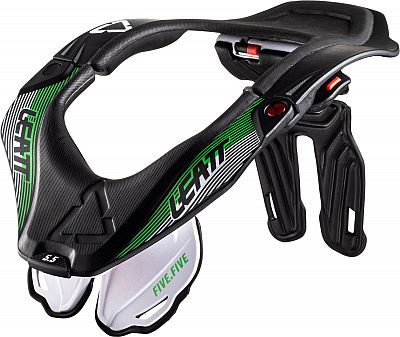


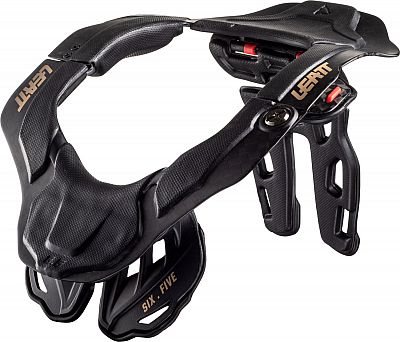


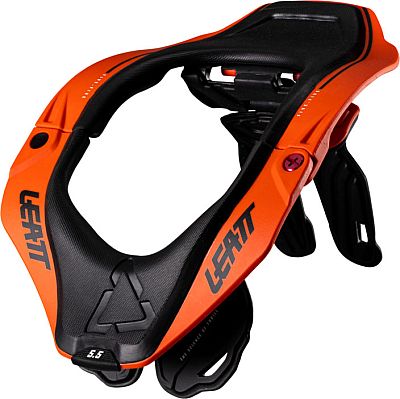


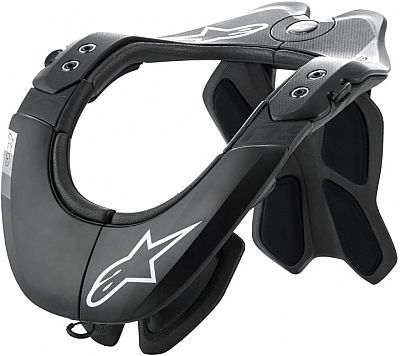


















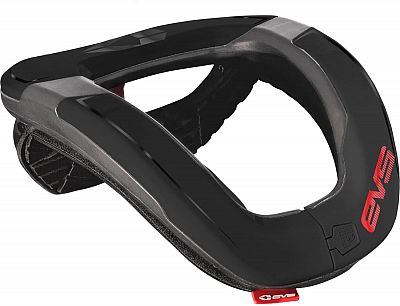


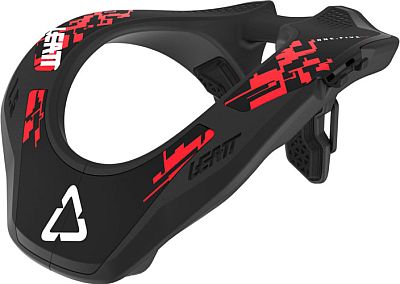


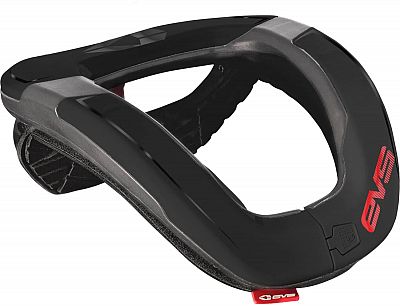


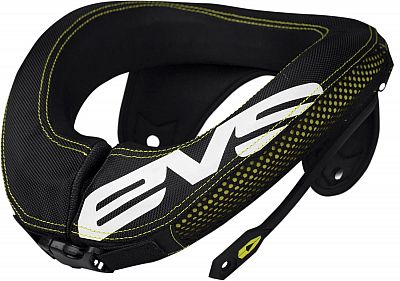


















Filter & sort
Sortierung
Motorcycle neck protection (neck brace): your guide to protecting your cervical spine
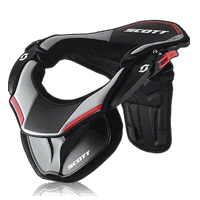
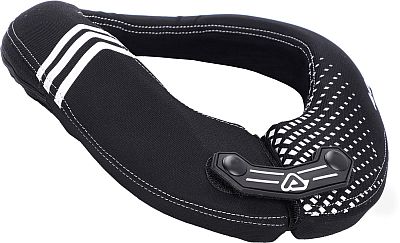
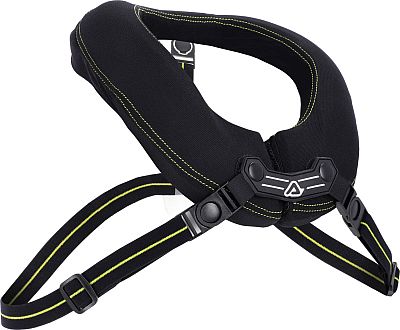
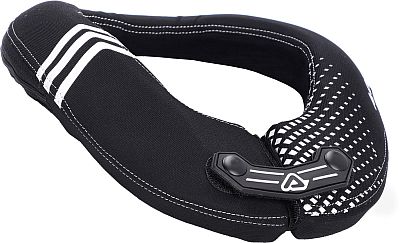
There is equipment that makes you more comfortable. There is equipment that makes you faster. And then there is equipment designed to protect you from the most serious injuries you can sustain. The latter, all-important category includes neck protection, better known as a neck brace. While your helmet protects your head, the sensitive cervical spine remains the critical connection between the two. A neck brace is the only protection system in the world specifically designed to control and deflect the extreme forces that act on this area in a serious fall.
For every ambitious off-road rider – from motocross riders to enduro adventurers – a neck brace is no longer a matter of style, but an indispensable part of personal protective equipment. In this guide, we dive deep into the biomechanics and fascinating technology of this life-saving device. We explain how a neck brace works, for whom it is absolutely essential, and how you can find the right model for you.

How does a neck brace work? The biomechanics of safety
To understand the importance of a neck brace, you need to know what forces act on the cervical spine in a fall. A neck brace is a passive safety measure that comes into play when the head moves outside its natural, safe range of motion.
The core principle
Controlled movement restriction
The most important task of a neck brace is to prevent extreme and uncontrolled movements of the head in all directions. It acts as a kind of ‘stop’ for the helmet.
Protection against hyperflexion (too far forward)
In a head-on collision, the chin is caught by the front part of the brace before the head can be pushed too far forward onto the chest.
Protection against hyperextension (too far back)
If the driver falls on their back, the lower edge of the helmet rests on the rear part of the brace, preventing the neck from being stretched backwards.
Protection against lateral hyperflexion
In a side impact, the rigid structure of the brace limits the tendency of the head to tilt toward the shoulder.
Energy dissipation
The “Alternative Load Path” technology
That is the real genius of the system. A neck brace not only prevents movement, but also actively dissipates the impact energy. The enormous force that would otherwise act unfiltered on the seven cervical vertebrae is transferred by the helmet to the brace. This distributes the energy via its support points to the much stronger and more stable parts of the body: the chest, shoulders, and upper back. It creates, as it were, an ‘alternative load path’ around the sensitive cervical spine.
Reduction of collarbone injuries
An often overlooked advantage: a well-fitting neck brace ensures a clear space between the helmet and the collarbone. In a side impact, the edge of the helmet cannot come into direct contact with the vulnerable collarbone, which significantly reduces the risk of one of the most common injuries in motor sports.
Who needs a neck brace? Areas of application
A neck brace is a highly specialized protective system for high-risk sports.
Motocross & Supercross
Here, a neck brace is absolutely standard and an indispensable part of professional sports. The combination of high speeds, long jumps, and hard landings carries an extreme risk of neck injury. A brace is part of the basic equipment here, just like the helmet itself.
Enduro, rally & hard enduro
Other dangers lurk on unpredictable terrain. Sudden stops due to obstacles, falls on steep slopes or collisions with trees can exert extreme forces on the neck. Every ambitious enduro and rally rider therefore relies on the protection of a neck brace.
Downhill mountain biking & bike park
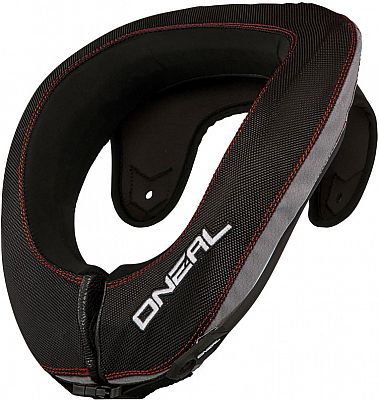
The speeds and risks involved in modern downhill sports are comparable to those in motocross. That's why neck braces have become an indispensable safety standard for ambitious riders and racers. A versatile model such as the ONeal Tron is perfectly suited for use on MTBs and MX bikes.
Is a neck brace also useful for driving?
That is a frequently asked and valid question. For normal touring and road traffic, a neck brace is generally not recommended. The reason: The limited freedom of movement of the head, which is a safety feature off-road, can be a hindrance in traffic (e.g. when looking over your shoulder) and restrict your all-round visibility. However, it can be a useful addition for circuit training.
Our top recommendations: the best neck braces in detail
Leading manufacturers such as Leatt and Alpinestars have perfected neck brace technology over the years.
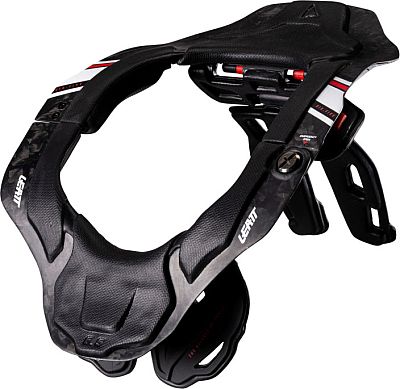
The high-end pioneer: Leatt 6.5 Carbon neck protection
Leatt is the inventor of the modern neck brace. The 6.5 Carbon model is the cream of the crop of their development. Made from ultra-light carbon, it offers maximum protection with minimal weight. It is adjustable at multiple points and can therefore be perfectly adapted to the body and the rest of the equipment. The choice for racers for whom every gram counts.
The technological challenger: Alpinestars BNS Tech 2 neck brace
Alpinestars is going its own way with the Bionic Neck Support (BNS). Made from an advanced polymer composite, it is designed for maximum robustness and optimal integration with Alpinestars' own protective jackets. A special feature is the Quick-Release system, which allows for quick and safe removal in an emergency.
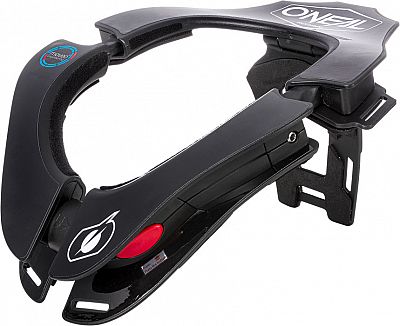
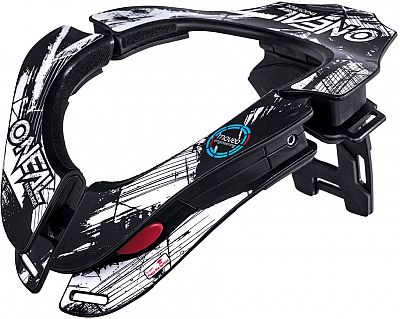
The versatile all-rounder: ONeal Tron neck brace
The Tron from O'Neal is the perfect entry into the world of neck protection. It offers all the fundamental protective features of a modern neck brace at a very attractive price. The design is suitable for use on both motorcycles and downhill bikes, making it an unbeatable value for money champion.
Purchasing advice: how to find the right neck brace
The protective effect of a neck brace depends on a perfect fit.
The right size and fit
Absolutely crucial! A neck brace should not be too loose. It should lie flat on the chest, back, and shoulders. The size is usually determined by chest circumference, not neck circumference. Measure your chest circumference under the arms and compare the value with the manufacturer's size chart. In a neutral riding position, there should only be a minimal gap between the helmet and the brace.
Adjustability
High-quality models such as the Leatt 6.5 or the Alpinestars BNS Tech 2 offer extensive adjustment options. The front and rear supports (thoracic struts) can be adjusted in length and angle. Take the time to adjust the brace perfectly to your body.
Compatibility with your equipment
A neck brace only works in combination with the rest of your equipment.
Helmet: The lower edge of your helmet must be able to move freely on the support surfaces of the brace. Helmets that protrude significantly may impair its effectiveness.
Chest protection/protective jacket: Many modern protective jackets and chest protectors have special cutouts (“Brace On”) to allow for perfect integration of the neck brace.
FAQ: Frequently asked questions about neck protection
1. Is a neck brace useful?
For high-risk sports such as motocross, enduro, or downhill, a neck brace is an extremely useful and potentially life-saving investment.
2. How exactly does a neck brace work?
It limits extreme movement of the head in the event of a fall and directs the impact energy away from the sensitive cervical spine to the more stable upper body.
3. When do you need a neck brace?
As soon as you participate in sports with a high risk of falling, high speeds, or big jumps, a neck brace is highly recommended.
4. Does a neck brace interfere with riding?
A well-fitted neck brace does not interfere with the head movements required while driving. You will quickly get used to wearing it. However, extreme head movements (such as looking vertically upwards) are restricted.
5. How do I put on a neck brace correctly?
It is usually opened with a fastener on the side and placed around the neck. It should rest comfortably on the shoulders and not “float.” It should be flat against the chest and back.
6. Does a neck brace also protect against a broken collarbone?
Indirectly, yes. By preventing the edge of the helmet from landing directly on the collarbone in the event of a fall on the side, the risk of this common injury is significantly reduced.
7. Can I combine any helmet with any neck brace?
In principle, yes. Most modern MX and enduro helmets are compatible with standard neck braces. However, helmets with very different shapes may restrict freedom of movement.
8. Do you wear the brace over or under your jersey/jacket?
The neck brace is always worn directly on the body or over a thin functional layer. The chest protector and jersey go over it.
9. Are there also neck braces for children? Yes, all leading manufacturers such as Leatt and Alpinestars offer special models for children and young people, which are tailored to their anatomy and weight.
10. How do I maintain my neck brace?
Most models can be easily cleaned with a damp cloth and a mild soap solution. The padding is often removable and can be washed by hand.
Conclusion: an investment in your future on two wheels
A neck brace is not equipment for everyday use, but specialized life insurance for those moments when everything is at stake. It offers a level of protection for your cervical spine that no other protector can provide. For any ambitious off-road rider or racer, it is a logical and responsible step to complete their protective gear.
Invest in your health and your sense of safety on the motorcycle.
Table of contents