















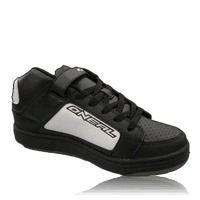



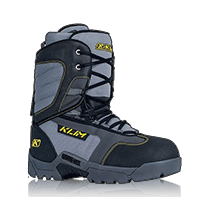













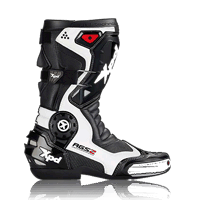
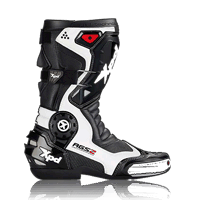
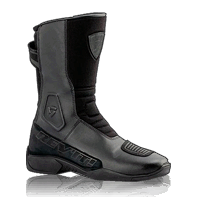
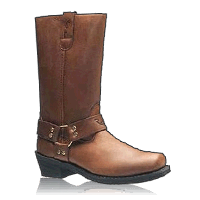
Touring boots


















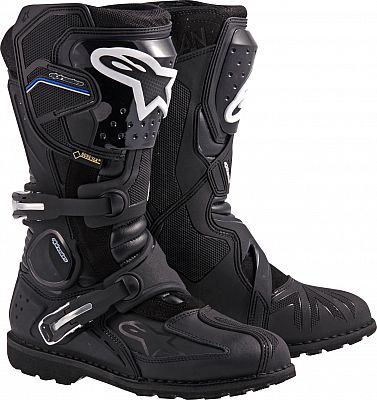

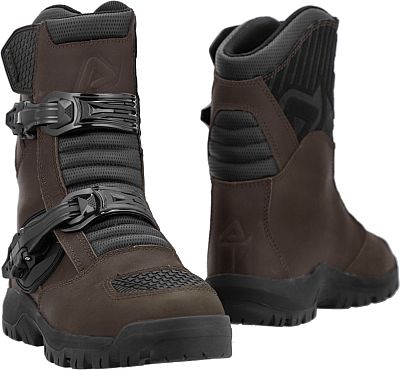


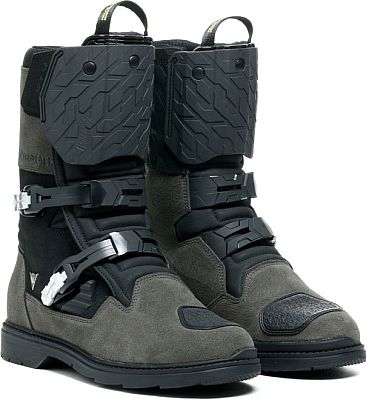


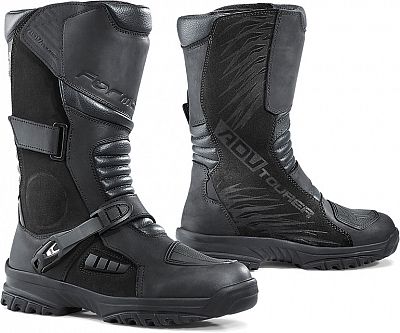








































































































Filter & sort
Sortierung
Touring boots: Your reliable partner for all weather conditions and every kilometer
You cover kilometer after kilometer. The landscape passes you by. The sun in the morning, an unexpected rain shower in the afternoon, the cool evening air on the Alpine pass. When you're on a long tour, you're exposed to the elements like no one else. Your motorcycle takes you to the most remote places, but it's your boots that keep you connected to the machine and carry you through countless hours in the saddle. It is here, on the long haul, that the wheat is separated from the chaff. A tight, leaky, or uncomfortable boot can turn even the most beautiful trip into torture. The touring boot is therefore not an accessory. They are your most important tool for comfort, safety, and endurance.
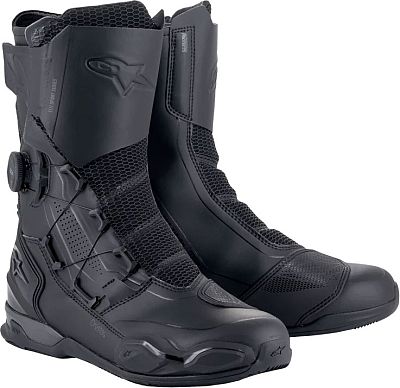
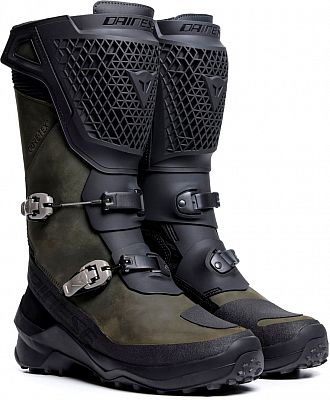
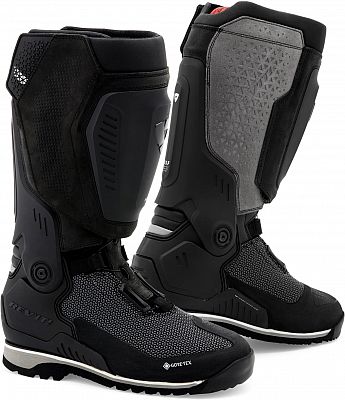
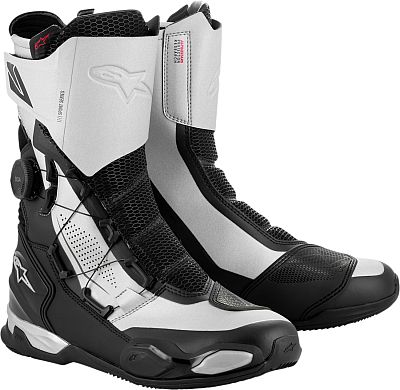
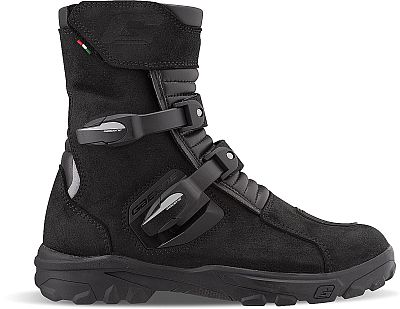
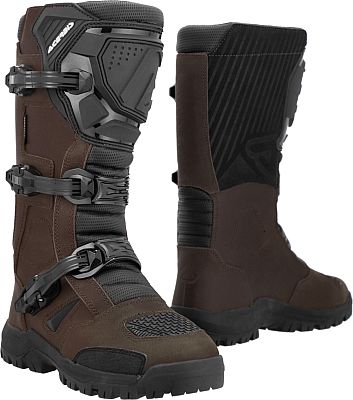
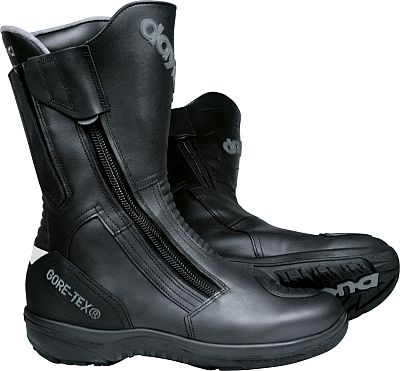
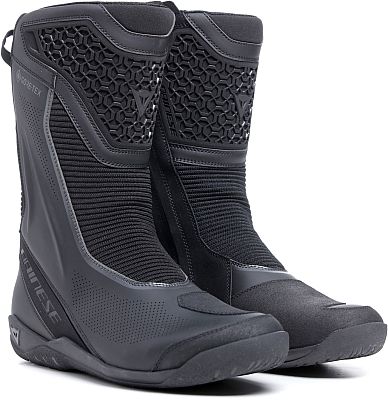
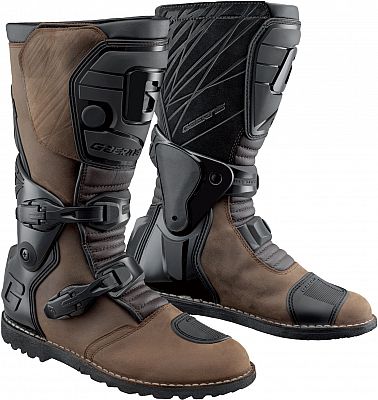
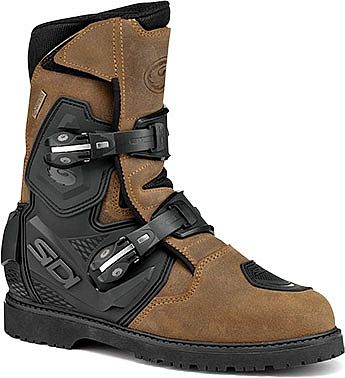
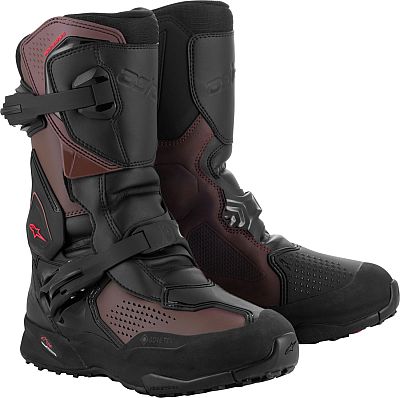
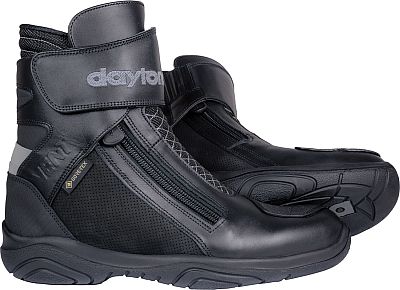
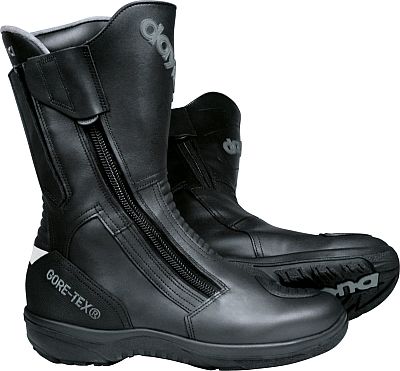
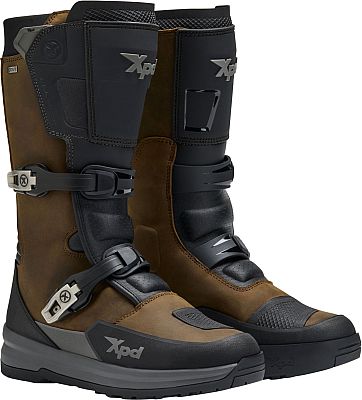
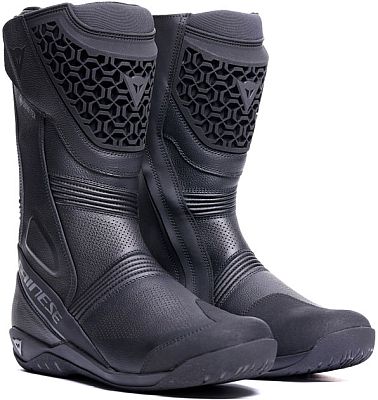
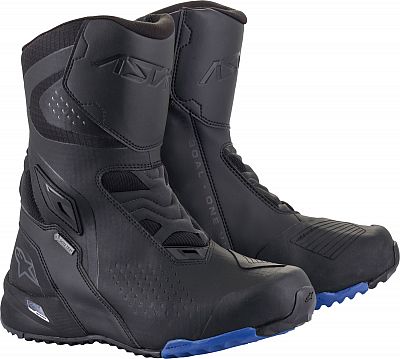
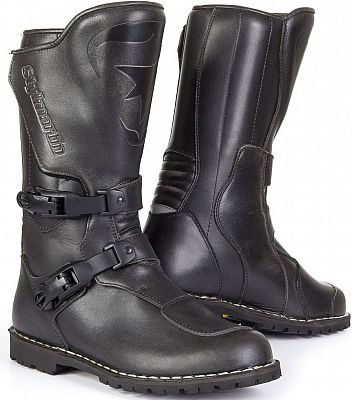
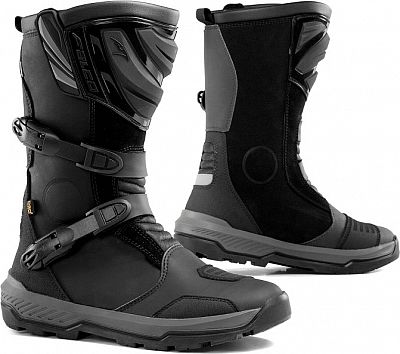
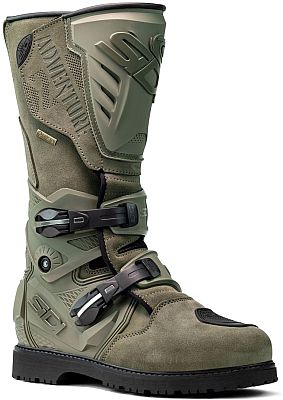
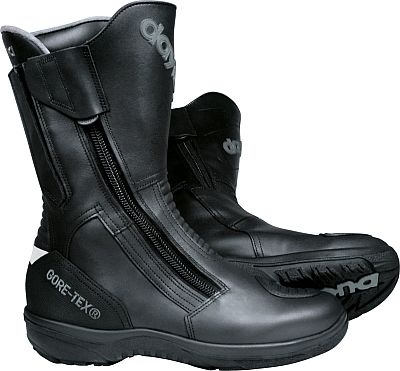
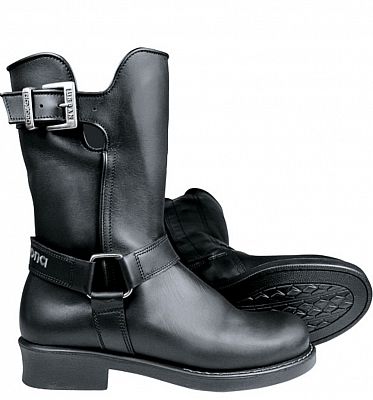
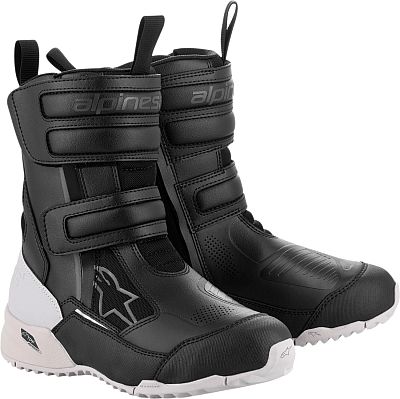
Welcome to the world of touring boots at motoin.com, the home for all mileage eaters, world travelers, and all-weather commuters. We understand that a touring boot must be the ultimate all-rounder. It must protect your feet in the event of a fall, keep them dry in torrential rain, breathe in hot weather, and be so comfortable that you can ride 500 miles without discomfort. protect your feet in the event of a fall, keep them dry in torrential rain, breathe in hot weather, and be so comfortable that you still feel like strolling around your destination after an 800-kilometer ride. That's why we offer an unrivaled selection of models from the legends of the industry: Discover the handmade perfection and durability of a Daytona boot. Experience the innovative technology and sporty comfort of Alpinestars and Sidi. Rely on the proven quality and excellent value for money of TCX.
This ultimate guide is your detailed route planner to the perfect touring boot. We explain why a climate membrane like Gore-Tex is one of the best investments you can make. We break down the modern touring boot into its comfort and safety components and show you what really matters when it comes to fit. Find not just a boot, but your steadfast partner for all the adventures that lie ahead.

Your touring boots: The most important purchase criteria at a glance
100% waterproof & breathable: An absolute must for every touring rider. Look for a high-quality climate membrane such as Gore-Tex to keep your feet dry and comfortable in all weather conditions.
All-day comfort: An ergonomically shaped footbed, a flexible but stable sole, and well-designed padding are crucial for long days in the saddle and on foot.
Certified protection: Touring boots must also be certified according to EN 13634 and have integrated but unobtrusive protectors on the ankle, heel, toes, and shin.
Easy handling: A well-designed closure system with side zippers and Velcro covers allows for quick and easy entry and exit.
Durability and quality: High-quality materials such as cowhide leather or modern microfibers, as well as excellent workmanship, guarantee that your boots will accompany you for many years and tens of thousands of kilometers.
The anatomy of a touring boot: The art of the all-rounder
A touring boot is a masterpiece of compromise – it combines the protection of a safety boot with the comfort of a hiking boot.
The heart of the boot: the climate membrane for perfect weather protection
This is the most important feature of any genuine all-weather touring boot.
What is a climate membrane and how does it work?
A climate membrane is a wafer-thin layer of microporous material (e.g., ePTFE in Gore-Tex) that is incorporated between the outer material and the inner lining of the boot. Its pores are around 20,000 times smaller than a drop of water, but 700 times larger than a water vapor molecule. The result: water from the outside (rain, puddles) cannot penetrate, while sweat in the form of water vapor can escape from the inside to the outside.
Gore-Tex & Co.: The differences
Gore-Tex is the best-known and most proven pioneer of this technology and is considered the gold standard in terms of durability and breathability. However, many manufacturers such as Alpinestars (Drystar) or TCX (T-Dry) have also developed their own high-quality climate membranes that offer excellent performance at an often more attractive price. For serious touring riders, there is no alternative to a high-quality membrane.
Comfort for thousands of kilometers: the foundation of your journey
Long periods of pressure on the footrests, vibrations, walking during breaks – the feet of a touring rider have to work extremely hard.
The footbed and insole
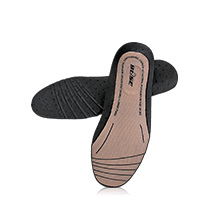
A good footbed is anatomically shaped, supports the arch of the foot, and absorbs shocks. Many high-quality boots have removable insoles that you can replace with orthopedic or special comfort insoles if necessary.
The sole: grip, flexibility, and stability
The outsole of a touring boot is a work of art. It must be oil and gasoline resistant and offer perfect grip on wet footrests. At the same time, it must be flexible enough in the front to allow for a natural rolling motion when walking. Inside, a stiffener provides the necessary lateral stability to protect the foot from crushing in the event of a fall.
Integrated protection: Safe but discreet
Unlike flashy racing boots, the protectors in touring boots are usually hidden discreetly under the upper material.
The most important protection zones
Ankles: Ergonomically shaped hard shells or viscoelastic inserts protect the inner and outer ankles.
Shin: A large, often anatomically pre-shaped protector protects the shin from impact.
Heel & toes: Robust caps in the heel and toe areas protect against impacts and bruising.
Shift reinforcement: A roughened material layer on the instep prevents abrasion from the shift lever.
Buying guide: How to find the perfect touring boot
The perfect fit: What you absolutely must pay attention to
Even the best boots are useless if they don't fit. Take your time when trying them on.
The right time and the right socks
It's best to try on boots in the afternoon, as your feet swell slightly during the day. Wear the type of (functional) socks that you would also wear on your tours.
The heel fit and toe space
The boot must fit snugly around the heel. When you walk, the heel should only lift slightly. At the front, around the toes, you should have about a thumb's width (approx. 1 cm) of space when standing. Your toes should never touch the front of the boot, even when you bend your knees. Make sure that the boot does not pinch anywhere.
Boot height: Why a high shaft is crucial when touring
A high shaft that extends well above the ankle to the lower third of the shin is essential for a touring boot for several reasons. Not only does it provide space for the important shin protector, it also stabilizes the entire ankle joint, protects against twisting, and ensures a tight connection to motorcycle pants so that no water can penetrate from above.
FAQ: Frequently asked questions about touring boots
1. Are all touring boots really waterproof?
No. There are also lighter summer touring boots without a climate membrane, which are optimized for riding in hot and dry regions and offer better ventilation. However, if you are looking for an all-weather boot for touring in Europe, you should definitely choose a model that is explicitly labeled as “waterproof” (WP) and has a high-quality membrane.
2. Are touring boots good for walking?
Yes, that is one of their greatest strengths. Unlike stiff racing or motocross boots, touring boots are designed to offer a high level of walking comfort. The sole is more flexible, the footbed is cushioned, and the entire structure allows for a relatively natural rolling motion. Strolling through town or visiting a tourist attraction is no problem with modern touring boots.
3. How important is a climate membrane like Gore-Tex really?
For serious touring riders, it is essential. Nothing can make a tour as unpleasant as wet and cold feet. A good membrane not only keeps you dry in an unexpected downpour, but also ensures a comfortable foot climate in warm weather thanks to its breathability, as sweat is transported to the outside. It's an investment in comfort and well-being on every ride.
4. How do I properly care for my touring boots with a climate membrane?
Clean the outside of the boots with water and a brush. For leather boots, it is important that you only use care products (creams or sprays) that are explicitly suitable for shoes with a climate membrane. Normal fats or oils would clog the pores of the membrane and destroy its breathability. Always allow the boots to dry slowly at room temperature.
5. Should the boots be worn under or over motorcycle pants?
With touring clothing, boots are usually worn under the pants. The legs of the touring pants go over the boot shaft. There is a simple reason for this: it allows rainwater running down the pant leg to run off the outside of the boot and not run into the boot shaft from above.
Conclusion: Your touring boots – the foundation for unforgettable journeys
Touring boots are the unsung heroes of every great journey. They work tirelessly in the background, protecting you from the dangers of the road and the elements, and carrying you comfortably over thousands of miles. Choosing the right model is one of the smartest investments you can make in your safety and riding enjoyment.
Don't settle for compromises. Whether you're looking for the legendary durability of a Daytona boot, prefer the sporty comfort of an Alpinestars model, or choose another of our top boots, you're always choosing a loyal partner that won't let you down. Find the perfect boots for your feet with us and get ready for your next big adventure.
Table of contents