





























Offroad goggles


BLACK WEEK price!


BLACK WEEK price!


BLACK WEEK price!


BLACK WEEK price!




BLACK WEEK price!


BLACK WEEK price!




BLACK WEEK price!


BLACK WEEK price!










BLACK WEEK price!


BLACK WEEK price!


BLACK WEEK price!


BLACK WEEK price!


BLACK WEEK price!


BLACK WEEK price!


BLACK WEEK price!


BLACK WEEK price!






BLACK WEEK price!


BLACK WEEK price!


BLACK WEEK price!




Filter & sort
Sortierung
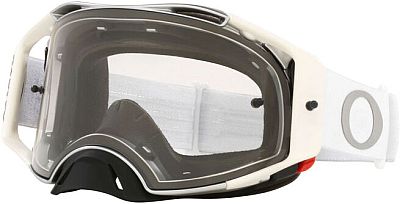
Motocross goggles & glasses: your ultimate guide to perfect vision on the toughest terrain
Dust, mud, flying stones, and relentless sweat – welcome to the world of off-road riding. In this demanding environment, where decisions must be made in fractions of a second, your vision is not just important, it is everything. A fogged-up visor, a watery eye, or a stone chip can mean the difference between the perfect line and a fall. Ordinary glasses are useless here. You need a specialized tool, a protective shield for your eyes that is specially designed for these harsh conditions: motocross goggles.
It is much more than just a windshield. It is a high-tech system of impact-resistant lenses, ventilated frames, and intelligent cleaning systems, with only one mission: to guarantee you perfect, protected vision in all conditions. But what is the difference between roll-off and tear-off? Which lens color is suitable for a shady forest trail? And how do you find the goggles that fit perfectly in your helmet? In this ultimate guide, we take you into the world of MX goggles. We break them down into their individual parts, explain the technologies used by the pros, and help you find the perfect weapon for your battle against the dirt.

The anatomy of high-performance motocross goggles
Modern motocross goggles are a perfectly coordinated system of three main components that determine whether you win or lose, have fun or get frustrated.
The frame: your field of vision and your comfort zone
The field of vision
Modern ski goggles like these are designed for maximum peripheral vision. A large frame with a thin profile allows you to see your competitors beside you and the terrain ahead without restrictive “blinders.”
Ventilation
A sophisticated system of air inlet and outlet openings in the frame ensures constant air circulation behind the lens. This prevents heat build-up and is the first line of defense against fogging.
The foam padding
More than just padding. A high-quality, multi-layer foam rubber lining (often three layers) has several functions: the first layer cushions, the second (open-pored) layer absorbs sweat, and the third, skin-friendly fleece layer ensures a comfortable and snug fit around the face.
The lens: your protective shield and filter
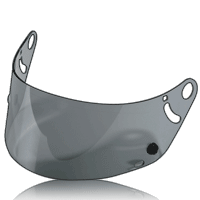
The material: impact-resistant polycarbonate
The lens of motocross goggles is not made of glass, but of high-quality, impact-resistant polycarbonate. It must be able to withstand the impact of stones thrown up by the motorcycle in front. Note the EN 1938 standard, the standard for motocross and enduro goggles.
The coatings: anti-fog and anti-scratch
An anti-fog coating on the inside is absolutely essential to prevent condensation from sweat and breath. An anti-scratch coating on the outside makes the lens more resistant to scratches from branches or during cleaning.
The tint: mirrored, tinted, or clear?
The color of the lens is not only a fashion choice, but also a functional tool for adapting to light conditions. Mirrored lenses, such as those used in , offer the best protection against glare in bright sunlight. Contrast-enhancing lenses (e.g., orange) are ideal for shady forest areas.
The fastening strap: non-slip fastening for when it matters
The fastening strap on motocross goggles is wide, robust, and elastic. The decisive detail is one or more continuous silicone lines on the inside. These literally adhere to the helmet shell and reliably prevent the goggles from slipping off during hard impacts or jumps.
The decisive technology: Roll-Off vs. Tear-Off – The battle for clear vision
When the mud is flying, the speed of your “window cleaning” is crucial. Here are two competing systems.
| Criterion | Roll-off system | Tear-off system |
|---|---|---|
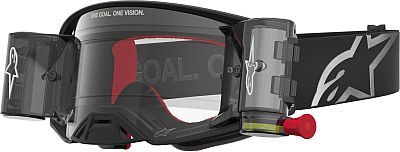
| Operation | A clean film is pulled from a reel on one side of the glass to a take-up reel on the other side. You pull a string and have a completely clean viewing window. | Several wafer-thin, transparent plastic films are stretched over pins on the outside of the glass. When dirty, the top film is torn off. |
| Advantages | Lots of clean “sheets”: A roll of film provides approximately 30-50 clean viewing windows. No waste: The dirty film is rolled up. Perfect visibility: you always have a completely clear, unobstructed field of vision. |
Quick and easy: You can stretch multiple layers (up to 7) over each other. Tearing off is lightning fast. Cheaper: Individual films are usually cheaper to purchase than a complete roll of film. |
| Disadvantages | Limited field of vision: You look through a narrower, clean strip in the middle of the window. Mechanics: the system is more complex and can jam in extreme conditions. |
Waste: the torn-off films end up in the environment – a no-go on many routes and enduro tours. Visibility quality: multiple layers can reflect or slightly distort visibility in certain lighting conditions. |
| Ideal for... | Enduro, rally, very long and muddy MX races. Anywhere where a lot of “cleaning” is required and no waste may be left behind. | Motocross, supercross. For short, intense races where rapid breakdown is essential and the films can be collected. |
Our top recommendations: for every style and every terrain
The champion in competitions: Scott Prospect
It is a legend in racing. It offers one of the largest fields of vision on the market, an ingenious Lens-Lock system for a secure lens fit, and movable outriggers that ensure perfect pressure inside the helmet. The “6 Days” edition pays tribute to the toughest enduro race in the world and makes a statement for every ambitious rider.
The high-performance all-rounder: Alpinestars Vision 8 Corp
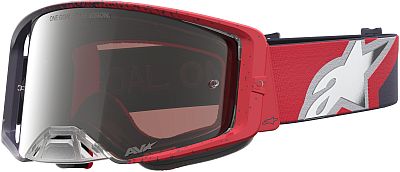
These ski goggles are a robust workhorse with premium features. A sturdy frame, a mirrored lens for sunny days, a high-quality foam rubber lining, and a sleek design make these goggles the perfect choice for the ambitious hobby racer and the demanding enduro rider.
The retro stylist: 100 Percent Barstow
Who says motocross goggles can't be stylish? The 100% Barstow combines the aesthetics of the pioneers of off-road sports with the latest technology. It's the perfect choice for riders of scramblers, classic enduros, or anyone who wants to show off a unique look in the riders' camp without sacrificing a huge field of vision and high-quality Dalloz lenses.
FAQ: Frequently asked questions about motocross goggles
1. What is the difference between motocross goggles and ski goggles?
Although they look the same, they are different. Motocross goggles are designed for higher impact resistance (stone impact), often have different ventilation for higher exertion, and are prepared for use with roll-off or tear-off systems.
2. Do all motocross goggles fit in every motocross helmet?
Most modern goggles fit in most modern helmets. However, very large goggle frames and very small helmet sizes can be a tight fit. Ideally, you should try both together.
3. What does “OTG” mean in motocross goggles?
OTG stands for “Over The Glasses” and means that these goggles are designed so that you can comfortably wear normal optical glasses underneath them.
4. Can you ride on the road with motocross goggles?
Yes, this is permitted and very popular in combination with an enduro helmet. It offers excellent protection. However, keep in mind that in rainy conditions, it is not as sealed as a helmet visor.
5. How do I clean my motocross goggles properly?
It is best to rinse them under running, lukewarm water to remove coarse sludge and sand. Then gently dab the lenses dry with the microfiber cloth provided or a soft cloth. Never rub them dry!
6. Are tear-offs permitted everywhere?
No. They are now banned for environmental reasons at many official race tracks and especially at enduro events in natural surroundings. Here, a roll-off system is the only permitted alternative.
7. Which lens color is best?
There is no “one” best color. Clear lenses are mandatory for bad weather. For sunny days, mirrored or heavily tinted lenses are ideal. For rides in the forest or in changing light conditions, contrast-enhancing lenses (orange, yellow) are unbeatable.
8. My glasses always fog up. What can I do?
Look for models with good ventilation and a high-quality anti-fog coating. It is also important not to overheat during short stops and not to slide the glasses directly onto a wet helmet.
9. Can I replace the lenses in my glasses?
Yes, the lenses in almost all high-quality motocross glasses are replaceable. Many manufacturers even use the same lens for different models in their series, which makes it easier to find spare parts.
10. Which is more important: a good helmet or good goggles?
Both are vital and only work as a system. A $1,000 helmet is useless if you can't see anything through cheap, fogged-up goggles. Invest in both!
Conclusion: your weapon for the battle for clear vision
In the field, your vision is your most important weapon. High-quality motocross goggles are a crucial investment that give you the confidence and security to focus fully on the track and your riding style. From the fit in the helmet and the right lens color to the choice between roll-off and tear-off – if you know what you need, you will find exactly the goggles that will guide you safely through the deepest mud and the thickest dust.
Maintain your overview when it matters.
Table of contents