































Suits








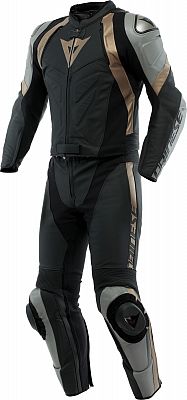


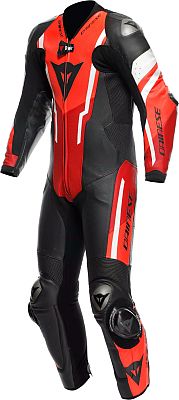


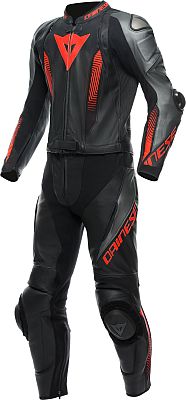


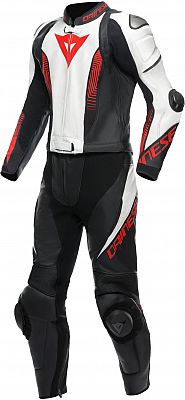


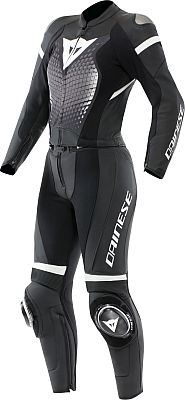


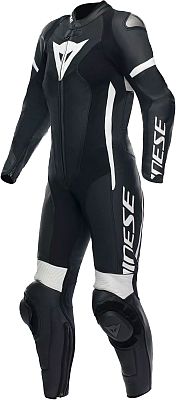


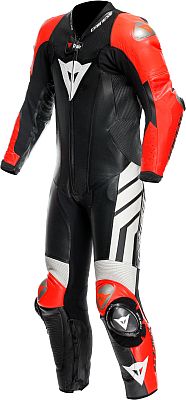


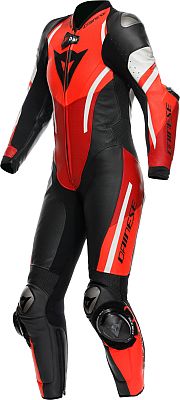
















Filter & sort
Sortierung
Leather suits: Your ultimate guide to the safest motorcycle clothing
Welcome to the premier league of motorcycle protective gear. A leather suit is more than just clothing—it's a promise. The promise of maximum safety, aerodynamic perfection, and the inimitable feeling of becoming one with the machine. Developed on the world's most demanding race tracks and worn by the fastest riders on the planet, the leather suit is the most direct link to professional racing. It is your second skin, your armor, giving you the confidence to focus fully on your passion.
But entering this world raises a fundamental question: Should it be the uncompromising, purist one-piece suit that was born for the racetrack? Or is the flexible, everyday two-piece suit the smarter choice for your adventures on the open road? In this comprehensive guide, we give you the tools you need to make your decision. We explain the unbeatable advantages of leather, guide you through the fundamental differences between the two designs, and prepare you perfectly for choosing your new gear with detailed purchasing advice.

Why a leather suit? The uncompromising advantages of leather
Textile clothing is incredibly versatile, but when it comes to ultimate protection at high speeds, leather remains the undisputed champion. The reasons for this lie in the unique properties of the material.
Unsurpassed abrasion protection: The science behind leather
The greatest danger in a high-speed fall is sliding across rough asphalt. High-quality cowhide or kangaroo leather has an extremely dense fiber structure that offers tremendous resistance to abrasion. Where textiles reach their limits and can melt due to frictional heat, leather glides over the surface and reliably protects your skin.Most leather suits are certified to the highest protection class AAA as standard.
Integrated safety systems: Complete protection
A leather suit is designed from the ground up as a closed protection system. It comes standard with a complete arsenal of CE-certified protectors for shoulders, elbows, hips, and knees. This is supplemented by external sliders made of hard plastic, metal, or ceramic at the joints, which not only increase impact protection but also improve sliding properties in the event of a fall.
Aerodynamics and fit: Like a second skin
A well-fitting leather suit fits snugly to the body and prevents any flapping of the clothing at high speeds. This not only reduces noise, but also rider fatigue, as there is no battle against the wind. The athletic, pre-shaped cut actively supports you in a sporty riding position.
Durability and value retention
A high-quality leather suit is an investment that, with proper care, can last for many years or even decades. Leather is an extremely robust material that develops a unique patina over time and adapts perfectly to your body.
The decisive choice: one-piece vs. two-piece – an introduction
This is the first and most important question you need to answer. Both concepts offer an extremely high level of protection, but are optimized for different purposes. Here is some help to guide you to the right category.
The one-piece suit: Born for the racetrack

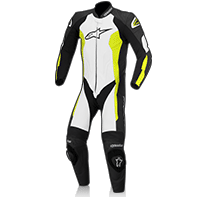
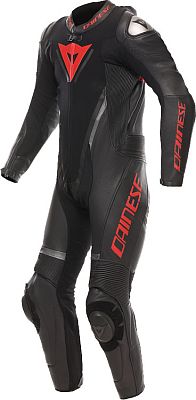
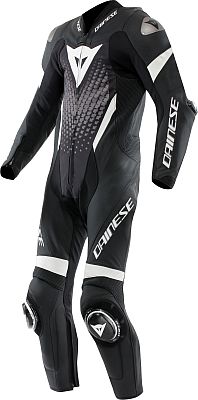
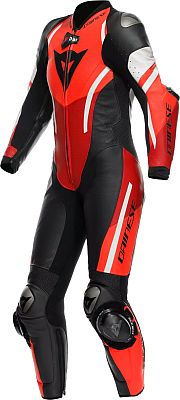
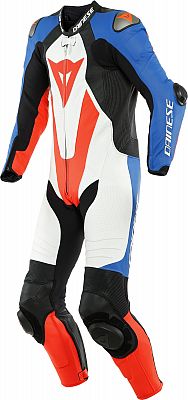
Description: A one-piece suit is uncompromising racing gear. The continuous construction from the knuckles to the neck provides maximum structural integrity. There are no potential weak points at the waist. Aerodynamics, fit, and protection are fully optimized for chasing the fastest lap times on the track.
Für wen? The one-piece suit is essential equipment for anyone who regularly rides on the racetrack, participates in track days, or enjoys an absolutely uncompromising, sporty riding style on the open road.
The next step: Do you feel at home on the race track and are you looking for the ultimate performance? Then the one-piece suit is your destiny.
The two-piece suit: The flexible all-rounder for the road

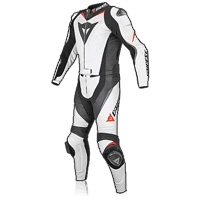
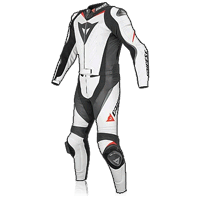
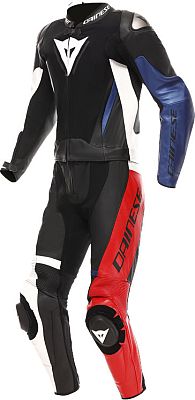
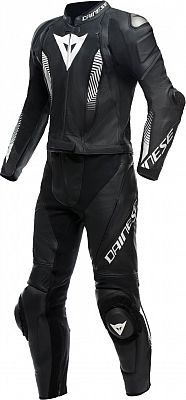
Description: A two-piece suit consists of a separate jacket and pants that are securely connected with a long, sturdy zipper. It combines a very high level of protection, similar to that of a one-piece suit, with a decisive advantage in terms of practicality and versatility.
Who is it for? The two-piece suit is the perfect companion for sporty road riders, ambitious touring riders, and anyone who doesn't want to compromise on leather protection in everyday life. The option of wearing the jacket on its own makes it incredibly versatile.
The next step: Are you looking for the perfect combination of first-class safety and maximum everyday practicality for your sporty tours?
Buying advice for leather suits: What you need to look out for in general
Regardless of whether you opt for a one-piece or two-piece suit, there are a few golden rules that apply to all leather suits.
The perfect fit: The most important rule when buying a suit
A leather suit must fit extremely tightly! When you first try it on while standing, it will probably feel too tight, too short, and uncomfortable. This is normal and correct! It will only reveal its true fit when you are in the typical bent position on the motorcycle. Only when it fits like a second skin can the protectors stay in place and dangerous creases be avoided.
Material information: Cowhide vs. kangaroo leather
The choice of leather affects weight and comfort.
Cowhide leather: The robust and proven standard. Extremely abrasion-resistant and durable.
Kangaroo leather: The premium material used in professional sports. It offers the same protection but is significantly lighter and thinner, which improves comfort and feel for the bike.
Protection classes & protector levels
Look for certification in accordance with EN 17092. A good leather suit should meet at least protection class AA, or better still the highest class AAA. The integrated protectors on the shoulders, elbows, hips, and knees should ideally be certified to level 2 to ensure maximum impact absorption.
Perforated or not? A question of climate
A perforated leather suit has thousands of tiny holes, mostly on the chest and thighs. This allows for excellent ventilation on hot days. It is ideal for use in summer only. For rides in the cooler transitional seasons, a non-perforated version in combination with functional underwear is the better choice.
FAQ: Frequently asked questions about leather suits
1. How should a leather suit fit?
Extremely tight, like a second skin. It should feel snug when standing; the perfect fit only becomes apparent when riding the motorcycle.
2. What should you wear under a leather suit?
Special functional underwear. It wicks sweat away from the body and ensures that the leather does not stick to the skin. This makes it much easier to put on and take off and increases comfort.
3. How do I properly care for my leather suit?
Clean regularly with a damp cloth and treat 1-2 times per season with high-quality leather grease or balm. This keeps the leather supple, protects it from drying out, and maintains its protective function.
4. Are leather suits waterproof?
No, not usually. They are water-repellent, but will become saturated in heavy rain. For riding in the rain, you will need a thin rain suit.
5. Can a leather suit be stretched or widened?
Leather stretches by itself in the crucial areas when worn. For larger adjustments, a professional leather tailor can insert stretch inserts.
6. How important are knee sliders?
They are not necessary for road use. On the racetrack, they are an important tool that gives you feedback about your lean angle and serves as a wear part.
7. My leather suit has become hard after riding in the rain. What can I do?
This is normal. Let it dry slowly at room temperature (never on a heater!) and then grease it thoroughly with leather care. It will soften again with movement.
8. Are there also leather suits for women?
Yes, absolutely. All major manufacturers offer a wide range of leather suits with a special cut tailored to the female anatomy.
9. What is an aerodynamic hump?
The hump on the back (“speed hump”) improves aerodynamics at high speeds and stabilizes the helmet-head area. It is a distinctive feature of sporty suits.
10. How often should a leather suit be cared for?
Basic care with leather balm is recommended once or twice a year, depending on how often you use it. After every ride in the rain, the leather should also be cared for once it has dried.
Conclusion: Your armor for the ultimate riding experience
A leather suit is the most logical choice for your safety on a motorcycle. It is a commitment to sporty riding and gives you the confidence you need to enjoy your bike and the road. The choice between the purist one-piece suit and the flexible two-piece suit is the first step on your journey. Analyze your needs, take a look at our detailed guides for both categories, and make the decision that will keep you safe through countless curves.
Table of contents