






























con oltre 200.000 articoli
a prezzi vantaggiosi
e rimborso garantito
servizio clienti
regali gratuiti
Dettagli articolo
Traduzione automatica
Testo originale in English
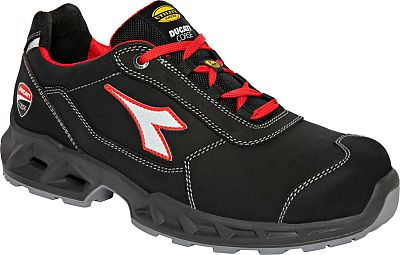
Diadora Utility Ducati Shark Engine Low S3S, scarpe di sicurezza
Cod. art.: 11093357


Scarpa di sicurezza S3S idrorepellente a taglio basso realizzata in pelle bovina scamosciata.
Caratteristiche
- Personalizzazione DUCATI CORSE
- Puntale in alluminio 200J
- Suola antiperforazione K-SOLE
- Tecnologia di ammortizzazione Stable Impact System
- Fodera in maglia d'aria con microfibra antiscivolo
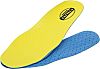
- Piedi anatomici, antistatici e rimovibili in schiuma PU riciclata a celle aperte, traspiranti con carbone attivo .
- ESD
- Certificato secondo la norma EN ISO 20345:2022, S3S FO SR ESD
Suola K
Soletta antiperforazione composta da diversi strati di tessuto speciale. L'utilizzo di questi materiali garantisce un'elevata resistenza, oltre a leggerezza e flessibilità. Questa soletta ha il vantaggio di coprire l'intera superficie del sottopiede, garantendo una protezione assoluta del piede. K SOLE è una soletta senza metallo.
Strato di alluminio
Il puntale in lega di alluminio, leggero, resistente e sottile, garantisce la massima sicurezza con il minimo ingombro.
D-Luce
D-Light è una miscela di poliuretano di nuova generazione sviluppata in collaborazione con BASF; leggera e confortevole, fornisce un'eccellente ammortizzazione e favorisce una calzata comoda e stabile in tutte le condizioni e su tutte le superfici di lavoro.
Sistema di impatto stabile
Dai laboratori di ricerca Diadora nasce STABLE IMPACT SYSTEM, tecnologia di ammortizzazione che permette di ottenere il massimo delle prestazioni di ammortizzazione e comfort indipendentemente dalla forza applicata. Lo Stable Impact System è un sistema di ammortizzazione che deriva dalla raccomandazione di utilizzare determinate forme nel design della suola. Lo scopo dell'ammortizzazione è quello di assorbire l'energia dell'impatto con il terreno e di ridurre il picco della forza di ritorno sul sistema muscolo-scheletrico dell'utente. L'energia restituita da questa tecnologia non dipende dal peso di chi la indossa, il che dimostra che questo sistema combina in modo ottimale ammortizzazione, reattività e comfort. Grazie alla combinazione di ammortizzazione e reattività, è indipendente dal numero di scarpe e dal peso dell'utente. Grazie all'ammortizzazione stabile e uniforme, il comfort e la stabilità della scarpa sono percepiti allo stesso modo da tutti i portatori.
Sistema di allacciatura scorrevole
Un sistema di allacciatura con lacci scorrevoli che consente un'allacciatura uniforme e racchiude il piede senza punti di pressione.
Nuova norma EN ISO 20345:2022
La nuova norma EN ISO 20345:2022 è stata pubblicata e recepita dal Regolamento (UE) 2016/425. Diadora Utility ha aggiornato le sue linee di calzature per garantire come sempre il massimo livello di sicurezza.
Requisiti essenziali
- Punta resistente 200 Joule + 15 kN
- Resistenza, innocuità e prestazioni dei materiali
- Ergonomia e comfort della calzatura
- Resistenza allo scivolamento su pavimento in ceramica & detergente, zona tallone/punta
Resistenza allo scivolamento
- SRA - Pavimento in ceramica & detergente, tallone/suola
- SRB - Pavimento in acciaio & glicerolo, tacco/suola
- SRC - SRA & SRB
- SR - Pavimento in ceramica & glicerolo, zona tallone/punta
Resistenza alla perforazione
- Standard precedente EN ISO 20345:2011:P ø = 4,5 mm Inserto antiperforazione metallico o non metallico
- P - Inserto antiperforazione metallico, ø = 4,5 mm
- PL - Inserto antiperforazione non metallico, ø = 4,5 mm
- PS - Inserto antiperforazione non metallico, ø = 3,0 mm
Altri requisiti e marcature
- E - Assorbimento di energia nella zona del tallone
- A - Antistatico
- WPA - Indumento esterno resistente alla penetrazione e all'assorbimento dell'acqua
- WR - Fodera impermeabile
- CI - Fodera calda
- HI - Isolamento termico
- SC - Protezione della punta
- HRO - Suola con resistenza al calore di contatto
- LG - Profilo Ladder-grip
- FO - Suola resistente agli idrocarburi
Classi di sicurezza per scarpe di sicurezza
Classe di sicurezza S1 – con cappuccio protettivo
Area di applicazione: area asciutta
Le scarpe di sicurezza di classe S1 sono utilizzate soprattutto in ambienti asciutti. I principali settori di applicazione sono, ad esempio, l'industria, l'artigianato e la logistica. La classe di sicurezza S1 soddisfa tutti i requisiti di base secondo la norma EN ISO 20345.
Requisiti della classe di sicurezza S1:
- Capo di protezione del tallone 200 joule
- Sezione tallone continua
- Antistatico
- Capacità di assorbimento dell'energia nella zona del tallone
EN ISO 20345 Scarpe di sicurezza con protezione della punta per carichi pesanti, il cui effetto protettivo è testato contro l'impatto con un'energia di prova di almeno 200 joule e contro la pressione con un carico di pressione di almeno 1.500 newton. Con puntale, tallone a tutta lunghezza, antistatico, assorbimento di energia nell'area del tallone.
Classe di sicurezza S1P – cappuccio protettivo/protezione da punture
Ambito di applicazione: aree asciutte e dove c'è il rischio che oggetti appuntiti e taglienti penetrino nella scarpa.
Le scarpe di sicurezza in classe di protezione S1P sono dotate di un cappuccio protettivo e di una suola antiperforazione. Sono adatte per l'uso in interni o in aree esterne asciutte dove possono essere presenti oggetti appuntiti. La classe di sicurezza S1P soddisfa tutti i requisiti di base della norma EN ISO 20345.
Requisiti della classe di sicurezza S1P:
- Cappello del tallone 200 joule
- Sezione tallone continua
- Antistatico
- Capacità di assorbimento dell'energia nella zona del tallone
- Resistenza alla perforazione della suola
Scarpe di sicurezza EN ISO 20345 con puntale protettivo per carichi pesanti, il cui effetto protettivo è testato contro l'impatto con un'energia di prova di almeno 200 joule e contro la pressione con un carico di pressione di almeno 1.500 newton. Con puntale protettivo e protezione contro la penetrazione (inserto resistente alla penetrazione), area del tallone a tutta lunghezza, antistatica, capacità di assorbimento dell'energia nell'area del tallone.
Classe di sicurezza S2 – cappuccio protettivo/idrorepellente
Area di applicazione: aree in cui si prevede l'umidità.
Le scarpe di sicurezza di classe di protezione S2 sono utilizzate soprattutto in ambienti umidi. Sono adatte per lavori all'aperto o al chiuso e in aree in cui si prevede l'umidità. La classe di sicurezza S2 soddisfa tutti i requisiti fondamentali della norma EN ISO 20345.
Requisiti della classe di sicurezza S2:
- Con puntale protettivo 200 joule
- Tallone continuo
- Antistatico
- Capacità di assorbimento dell'energia nella zona del tallone
- Caratteristiche di idrorepellenza – impermeabilità all'acqua, circa 1 ora .
Le principali aree di applicazione sono, ad esempio: Industria, artigianato, logistica e ingegneria. EN ISO 20345 Scarpe di sicurezza con puntale protettivo per carichi pesanti, il cui effetto protettivo è testato contro le sollecitazioni d'urto con un'energia di prova di almeno 200 joule e contro la pressione con un carico di almeno 1.500 newton. Con puntale protettivo, area del tallone a tutta lunghezza, antistatica, capacità di assorbimento dell'energia nell'area del tallone, caratteristiche idrorepellenti.
Classe di sicurezza S3 – cappuccio protettivo/protezione da punture/idrorepellente
Area di applicazione: aree in cui si prevede l'umidità e in cui vi è il rischio di penetrazione da parte di oggetti appuntiti e taglienti.
Le scarpe di sicurezza in classe di protezione S3 hanno un cappuccio protettivo, un'intersuola resistente alla penetrazione di chiodi e sono idrorepellenti. Sono adatte per lavorare all'aperto o nei cantieri. La classe di protezione S3 soddisfa tutti i requisiti di base secondo la norma EN ISO 20345.
Requisiti della classe di protezione S3:
- Calotta del tallone 200 joule
- Sezione tallone continua
- Antistatico
- Capacità di assorbimento dell'energia nella zona del tallone
- Resistenza alla penetrazione della suola
- Resistenza ai carburanti (benzina e olio)
- Caratteristiche idrorepellenti – impermeabilità all'acqua, circa 1 ora .
Scarpe di sicurezza EN ISO 20345 con puntale protettivo per carichi pesanti, il cui effetto protettivo è testato contro l'impatto con un'energia di prova di almeno 200 joule e contro la pressione con un carico di almeno 1.500 newton. Con protezione della punta e protezione antiperforazione (soletta antiperforazione), zona del tallone a tutta lunghezza, antistatica, assorbimento dell'energia nella zona del tallone, caratteristiche idrorepellenti, suola profilata.
Classe di protezione S5 – cappuccio protettivo/protezione antiperforazione/idrorepellente
Area di applicazione: aree bagnate.
Stivali di sicurezza EN ISO 20345 con puntale protettivo per carichi pesanti, il cui effetto protettivo è stato testato contro le sollecitazioni d'urto con un'energia di prova di almeno 200 joule e contro la pressione con una sollecitazione di almeno 1.500 newton. Con puntale e protezione antiperforazione (inserto antiperforazione), zona del tallone a tutta lunghezza, antistatica, capacità di assorbimento dell'energia nella zona del tallone, proprietà idrorepellenti, suola profilata.
Classe di protezione S6 – impermeabile
Area di applicazione: aree umide.
La classe di protezione S6 si riferisce a scarpe con le caratteristiche della classe di protezione S2, con l'unica differenza che le scarpe S6 sono completamente impermeabili. Queste scarpe sono solitamente realizzate con membrane.
EN ISO 20345 Stivali e scarpe di sicurezza con puntale protettivo per uso gravoso, in cui viene testato l'effetto protettivo contro l'impatto con un livello di energia di almeno 200 joule e contro la pressione con una forza di compressione di almeno 1.500 newton. Con puntale protettivo, tallone a tutta lunghezza, antistatico, capacità di assorbimento dell'energia nell'area del tallone, caratteristiche di impermeabilità, suola profilata.
Classe di protezione S7, S7L, S7S – puntale protettivo/protezione da penetrazione/impermeabile
Area di applicazione: aree umide.
EN ISO 20345 stivali di sicurezza con puntale protettivo per carichi pesanti, il cui effetto protettivo è testato contro gli effetti di un impatto con un'energia di prova di almeno 200 joule e contro la pressione con un carico di pressione di almeno 1.500 newton.
Con protezione della punta e protezione antiperforazione (soletta antiperforazione), area del tallone a tutta lunghezza, antistatica, capacità di assorbimento dell'energia nell'area del tallone, proprietà idrorepellenti, suola profilata.
Le scarpe di sicurezza di classe di protezione S7 hanno le caratteristiche delle scarpe S6 (che si basano sulla classe di protezione S2) e offrono resistenza alle forature grazie alla suola in acciaio. Inoltre, alcune aree della suola devono avere un profilo aperto con una profondità minima di 2,5 millimetri.
Le scarpe della classe di sicurezza S7L hanno un inserto tessile in grado di resistere a un chiodo di prova di 4,5 millimetri; l'inserto tessile delle scarpe S7S è stato testato con un chiodo di prova di 3 millimetri.
Diadora Utility Ducati Shark Engine Low S3S, safety shoes
Article No.: 11093357
Low-cut water-repellent S3S safety shoe made of cowhide suede.
Features
- Personalization DUCATI CORSE
- Aluminum toe cap 200J
- Anti-perforation insole K-SOLE
- Cushioning technology Stable Impact System
- Lining made of air mesh with non-slip microfiber
- Anatomical, antistatic, removable footbed made from recycled, open-cell PU foam, breathable with activated carbon
- ESD
- Certified according to the EN ISO 20345:2022 standard, S3S FO SR ESD
K SOLE
A puncture-resistant insole made of several layers of special fabric. The use of these materials guarantees high resistance, in addition to lightness and flexibility. This insole has the advantage of covering the entire surface of the insole, ensuring absolute protection of the foot. K SOLE is a metal-free insole.
Alu Layer
The lightweight, strong and slim aluminum alloy shoe tip ensures maximum security with minimal space requirements.
D-Light
D-Light is a new generation polyurethane blend developed in collaboration with BASF; light and comfortable, it provides excellent cushioning and promotes a comfortable and stable fit in all conditions and on all work surfaces.
Stable Impact System
From the Diadora research laboratories comes STABLE IMPACT SYSTEM, CUSHIONING technology that allows for maximum cushioning and comfort performance regardless of the force applied. The Stable Impact System is a cushioning system that results from it being recommended to use certain shapes in the sole design. The purpose of the damping is to absorb the energy of impact with the ground and to reduce the peak of the return force on the user's musculoskeletal system. The energy returned by this technology does not depend on the weight of the wearer, which shows that this system optimally combines damping, responsiveness and comfort. Thanks to the combination of cushioning and responsiveness, it is independent of the shoe size and the weight of the user. Thanks to the stable and even cushioning, the comfort and stability of the shoe is perceived the same by all wearers.
Sliding Lacing System
A lacing system with sliding laces that allows even lacing and encloses the foot without pressure points.
New standard EN ISO 20345:2022
The new standard EN ISO 20345:2022 has been published and implemented by Regulation (EU) 2016/425. Diadora Utility has updated its footwear lines to ensure the highest level of safety as always.
Essential requirements
- Resistant toe cap 200 Joule + 15 kN
- Resistance, innocuousness and performance of materials
- Ergonomics and comfort of footwear
- Slip resistance on ceramic floor & detergent, heel/toe area
Slip resistance
- SRA - Ceramic floor & detergent, heel/sole
- SRB - Steel floor & glycerol, heel/sole
- SRC - SRA & SRB
- SR - Ceramic floor & glycerol, heel/toe area
Puncture resistance
- Previous standard EN ISO 20345:2011:P ø = 4.5 mm Puncture-resistant insert metallic or non-metallic
- P - Metallic anti-perforation insert, ø = 4.5 mm
- PL - Non-metallic anti-perforation insert, ø = 4.5 mm
- PS - Non-metallic anti-perforation insert, ø = 3.0 mm
Other requirements and markings
- E - Energy absorption in the heel area
- A - Antistatic
- WPA - Outer garment resistant to water penetration and absorption
- WR - Waterproof lining
- CI - Warm lining
- HI - Heat insulation
- SC - Toe protection
- HRO - Outsole with resistance to contact heat
- LG - Ladder-grip profile
- FO - Hydrocarbon-resistant sole
Safety classes for safety shoes
Safety class S1 – with protective cap
Area of application: dry area
Safety shoes in safety class S1 are mostly used in dry environments. The main areas of application are, for example, industry, Craftsmanship and logistics. Safety class S1 fulfills all basic requirements according to EN ISO 20345.
Requirements of safety class S1:
- Toe protection cap 200 joules
- Continuous heel section
- Antistatic
- Energy absorption capacity in the heel area
EN ISO 20345 Safety shoes with toe protection for heavy loads, the protective effect of which is tested against impact with a test energy of at least 200 joules and against pressure with a pressure load of at least 1,500 newtons. With toe cap, full-length heel, antistatic, energy absorption in the heel area.
Safety class S1P – protective cap/puncture protection
Area of application: dry areas and where there is a risk of sharp and pointed objects penetrating the shoe.
Safety shoes in protection class S1P have a protective cap and a puncture-resistant sole. They are suitable for indoor use or for dry outdoor areas where sharp objects may be present. Safety class S1P meets all the basic requirements of EN ISO 20345.
Requirements of safety class S1P:
- Toe cap 200 joules
- Continuous heel section
- Antistatic
- Energy absorption capacity in the heel area
- Puncture resistance of the outsole
EN ISO 20345 safety shoes with protective toecap for heavy loads, the protective effect of which is tested against impact with a test energy of at least 200 joules and against pressure with a pressure load of at least 1,500 newtons. With protective toecap and penetration protection (penetration-resistant insert), full-length heel area, antistatic, energy absorption capacity in the heel area.
Safety class S2 – protective cap/water-repellent
Area of application: areas where moisture is to be expected.
Safety shoes of protection class S2 are mostly used in damp environments. They are well suited for outdoor or indoor work and in areas where moisture is to be expected. Safety class S2 meets all the basic requirements of EN ISO 20345.
Requirements of safety class S2:
- With protective toe cap 200 joules
- Continuous heel
- Antistatic
- Energy absorption capacity in the heel area
- Water-repellent features – water-impermeable, approx. 1 hour
The main areas of application are, for example: Industry, craftsmanship, logistics and Engineering. EN ISO 20345 Safety shoes with a protective toecap for heavy loads, the protective effect of which is tested against impact stress with a test energy of at least 200 joules and against pressure at a pressure load of at least 1,500 newtons. With a protective toecap, full-length heel area, antistatic, energy absorption capacity in the heel area, water-repellent features.
Safety class S3 – protective cap/puncture protection/water-repellent
Area of application: areas where moisture is to be expected and where there is a risk of penetration by pointed and sharp objects.
Safety shoes in protection class S3 have a protective cap, a nail-penetration-resistant midsole and are water-repellent. They are suitable for working outdoors or on construction sites. The S3 protection class meets all basic requirements according to EN ISO 20345.
Requirements of protection class S3:
- Toe cap 200 joules
- Continuous heel section
- Antistatic
- Energy absorption capacity in the heel area
- Penetration resistance of the outsole
- Fuel resistance (petrol and oil)
- water-repellent features – water-impermeable, approx. 1 hour
EN ISO 20345 safety shoes with a protective toecap for heavy loads, the protective effect of which is tested against impact with a test energy of at least 200 joules and against pressure at a pressure load of at least 1,500 newtons. With toe protection and puncture protection (puncture-resistant insole), full-length heel area, antistatic, energy absorption in the heel area, water-repellent features, profiled sole.
Protection class S5 – protective cap/puncture protection/water-repellent
Area of application: wet areas.
EN ISO 20345 safety boots with protective toecap for heavy loads, the protective effect of which has been tested against impact stress with a test energy of at least 200 joules and against pressure at a pressure stress of at least 1,500 newtons. With toe cap and puncture protection (puncture-resistant insert), full-length heel area, antistatic, energy absorption capacity in the heel area, water-repellent properties, profiled sole.
Protection class S6 – waterproof
Area of application: wet areas.
Safety class S6 refers to shoes with the features of safety class S2, with the only difference being that S6 shoes are completely waterproof. These shoes are usually made with membranes.
EN ISO 20345 Safety boots and shoes with a protective toecap for heavy-duty use, in which the protective effect against impact with an energy level of at least 200 joules and against pressure with a compressive force of at least 1,500 newtons is tested. With protective toecap, full-length heel, antistatic, energy absorption capacity in the heel area, waterproof features, profiled sole.
Protection class S7, S7L, S7S – protective toecap/penetration protection/waterproof
Area of application: wet areas.
EN ISO 20345 safety boots with protective toecap for heavy loads, the protective effect of which is tested against the effects of an impact with a test energy of at least 200 joules and against pressure at a pressure load of at least 1,500 newtons.
With toe protection and puncture protection (puncture-resistant insole), full-length heel area, antistatic, energy absorption capacity in the heel area, water-repellent properties, profiled sole.
Safety shoes of protection class S7 have the features of S6 shoes (which are based on protection class S2) and offer puncture resistance thanks to their steel sole. In addition, certain areas of the outsole must have an open-sided profile with a minimum depth of 2.5 millimeters.
The shoes of the S7L safety class have a textile insert that can withstand a 4.5 millimeter test nail; the textile insert of S7S shoes has been tested with a 3 millimeter test nail.
Prodotti abbinati
Pezzi di ricambio
Recensioni dei clienti
Hai già provato l\'articolo?