






























con oltre 200.000 articoli
a prezzi vantaggiosi
e rimborso garantito
servizio clienti
regali gratuiti
Dettagli articolo
Traduzione automatica
Testo originale in English
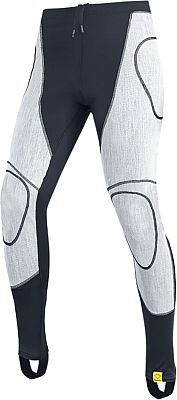
Bowtex Essential Ultralight, pantaloni protettivi unisex
Cod. art.: 11102722


I confini della leggerezza nell'abbigliamento protettivo per motociclisti vengono superati!
L'Essential Ultralight è realizzato in un unico strato elasticizzato unisex in Dyneema®/elastan, che offre una sensazione di protezione e comfort che avvolge il corpo come una seconda pelle. Indossali sotto i tuoi jeans o pantaloni preferiti e trasformali in capi con classificazione AA.
Le fibre Dyneema® e le loro proprietà termoconduttive ti consentono di rimanere fresco e a tuo agio anche durante i viaggi più lunghi e in tutte le condizioni atmosferiche.
Caratteristiche
- Livello di certificazione AA secondo la norma EN17092-3:2020
- Il tessuto fresco in Dyneema®/elastan offre grande elasticità e traspirabilità
- La struttura 3D X-Panel garantisce libertà di movimento per la massima flessibilità
- Cuciture flatlock rinforzate su tutto il capo
- Cordino regolabile in vita per una vestibilità perfetta
- Protezioni SAS-TEC Tripleflex livello 1 per ginocchia (SC-1/KA) e fianchi (SC-1/KA) incluse
- Ultraleggero, ultraelastico e facilmente ripiegabile
- 100% Made in Europe
Perché esiste una normativa di certificazione?
Principalmente, serve ad aiutarti a scegliere tra diversi tipi di equipaggiamento protettivo per motociclisti. Il suo scopo principale è consentire ai motociclisti di procurarsi l’equipaggiamento giusto per il loro specifico caso d’uso. Che si tratti di guidare in città, su strade secondarie o in autostrada.
Grazie alla norma EN17092, i motociclisti possono avere una visione d’insieme più chiara dei livelli reali di prestazione dell’equipaggiamento che indossano. Ogni capo deve recare un marchio di certificazione, ovvero un’etichetta che indichi se è stato certificato per il livello C, B, A, AA o AAA.
Questa normativa è ora obbligatoria dal 21 aprile 2023. E ora in Europa non è più legale vendere equipaggiamento protettivo per motociclisti senza un marchio di certificazione.
La norma EN17092 riguarda esclusivamente pantaloni e giacche, poiché stivali, guanti e caschi hanno ciascuno una propria normativa specifica.
Si potrebbe pensare che le tute in pelle siano le più resistenti in circolazione, ma a quanto pare i tessuti tecnici hanno fatto passi da gigante e ora sono in grado di raggiungere il massimo livello ottenibile secondo la norma EN17092.
Questa nuova normativa ridefinisce in un certo senso i limiti di ciò che è realizzabile.
Chi effettua quali test?
I test di resistenza vengono tutti effettuati da laboratori indipendenti approvati dalla Commissione Europea. I produttori di abbigliamento da moto si rivolgono a loro per ottenere un marchio di certificazione sui prodotti che intendono vendere all’interno dell’UE.
Per quanto riguarda i test stessi, possiamo classificarli nelle seguenti categorie principali:
- Abrasione da impatto
- Resistenza allo strappo
- Resistenza allo scoppio
- Resistenza delle cuciture
- Vestibilità ed ergonomia
- Innocuità chimica
Naturalmente, per ottenere il marchio di certificazione è necessario superare tutti i test.
I produttori di abbigliamento devono scegliere un determinato livello (C, B, A, AA, AAA) prima che vengano effettuati i test.
Livello AAA
Livello massimo. È normalmente riservato all’abbigliamento da moto per uso intensivo. La velocità di abrasione è aumentata a 120 km/h. Pertanto, sono coperti tutti gli usi su strada, compresa la guida in autostrada e a velocità più elevate. Il livello AAA offre inoltre una resistenza agli urti superiore, non solo sui fianchi e sulle ginocchia, ma anche sulla parte posteriore.
Livello AA
Il punto di equilibrio ideale. Il livello AA offre una discreta resistenza all'abrasione, a 70 km/h, e agli urti. Copre il normale utilizzo su strada, esclusi i tratti ad alta velocità come le autostrade. Bowtex ha deciso di non certificare capi al livello AA, poiché i motociclisti viaggiano spesso a velocità superiori rispetto alle automobili.
Le diverse zone a rischio
La norma EN17092 distingue tre zone del corpo separate, definite in base al rispettivo rischio di impatto in caso di incidente.
La zona 1 è quella più esposta all’abrasione e agli urti ed è quindi la zona che richiede la maggiore resistenza da parte dell’indumento. Nella parte superiore del corpo comprende le spalle e i gomiti; nelle gambe, invece, comprende i fianchi e le ginocchia.
Il livello AAA costituisce un’eccezione, in quanto la zona 1 si estende ora anche alla parte posteriore del corpo.
La zona 2 presenta un rischio medio di abrasione e impatto. Nella parte superiore del corpo, comprende la parte esterna delle braccia e la schiena. Nelle gambe, comprende i fianchi e le cosce.
La zona 3 è considerata quella a minor rischio di abrasione e impatto. Nella parte superiore del corpo, comprende la parte anteriore e interna delle braccia. Nella parte inferiore del corpo, comprende la parte anteriore e interna delle gambe.
Attenzione! Un rischio basso non significa assenza di rischio. Nella zona 3, Bowtex ha raccomandato l’uso di un tessuto in poliammide resistente che possa essere certificato di per sé per il livello A.
Bowtex Essential Ultralight, protector pants unisex
Article No.: 11102722
The boundaries of lightness in motorcycle protective equipment get pushed!
The Essential Ultralight is a stretchy unisex Dyneema®/Elastane monolayer construction, providing a skin hugging feeling of protection and comfort. Slide them under your favorite pair of jeans or pants and transform them into AA rated garments.
Dyneema® fibers and their thermo-conductive properties allow you to stay cool and comfortable on the longest of rides and in all weather conditions.
Features
- Certification level AA rating according to EN17092-3:2020
- Fresh Dyneema® / Elastane fabric provides great elasticity and breathability
- The X-Panel 3D construction frees your movements for maximum flexibility
- Reinforced flat lock seams all around
- Adjustable drawstring waist for a perfect fit
- SAS-TEC Tripleflex level 1 knee (SC-1/KA) and hip (SC-1/KA) protectors included
- Ultra lightweight, ultra stretchy and easily packable
- 100% Made in Europe
Why do we have a certification regulation?
Mainly, it's here to help you chose between different type of protective rider equipment. Its main purpose is for riders to be able to get the right gear for their specific use case. Whether you are riding around town, on back roads or on the freeway.
Thanks to EN17092, riders can have a better overall view of the real performance levels of the gear they are wearing. Each garment need to have a certification marking, i.e. a label that tells whether it's been certified for level C, B, A, AA or AAA.
This regulation is now compulsory since April 21st, 2023. And it's now no longer legal to sell rider protective equipment in Europe without a certification marking.
EN17092 is here to test pants and jackets exclusively, as boots, gloves and helmets each have their own specific regulation.
You might think that leather suits are the strongest thing out there, but it turns out that technical textiles have come a long way and are now able to achieve the maximum level attainable in accordance with EN17092.
This new regulation sort of reshuffles the card of what is achievable.
Who carries which tests?
Resistance tests are all carried out by independent laboratories approved by the European Comission. Motorcycle gear manufacturers turn to them in order to obtain a certification marking on the products that they want to sell within the EU.
As far as the tests themselves, we can categorize them in the following main types:
- Impact abrasion
- Tear strength
- Burst strength
- Seam strength
- Fit and ergonomics
- Chemical innocuousness
Of course, one must obtain positive results to all tests in order to obtain a certification marking.
Gear manufacturer have to choose a certain level (C, B, A, AA, AAA) before the tests are carried out.
Level AAA
Top level. It's normally reserved for heavy riding gear. The abrasion speed is raised to 120kph. Therefore all road uses are covered, including freeway riding and higher speeds. Level AAA also offers superior impact resistance, not only on the hips and the knees, but also on the rear.
Level AA
The sweet spot. Level AA offers a decent amount of resistance against abrasion, at 70kph, and impacts. It covers normal road use, excluding high speed sections such as freeways. At Bowtex, they decided not to certify garments under level AA, as riders are often going at higher speeds compared to cars.
The different risk zones
EN17092 distinguishes three separate body zones, which are defined according to their respective risk of impact in the event of an accident.
Zone 1 is most exposed to abrasion and impact and is therefore the zone that requires the greatest resistance from a garment. On the upper body, it consists of the shoulders and elbows. And on the legs, it consists of the hips and knees.
Level AAA is an exception, as zone 1 now extends to the back of the body.
Zone 2 is at medium risk for abrasion and impact. On the upper body, this includes the outside of the arms and the back. On the legs, it includes the hips and thighs.
Zone 3 is considered the zone of least risk for abrasion and impact. On the upper body, this is the front and inside of the arms. On the lower body, this is the front and inside of the legs.
Caution! Low risk does not mean no risk. In zone 3, Bowtex has recommended the use of a strong polyamide fabric that could be certified for level A on its own.
Recensioni dei clienti
Hai già provato l\'articolo?